The Business of Being Understood
LVMH is buying workshops in Tuscany. Rhode built a phone case around a lip treatment. Third Row Thinking on two very different ways of making people believe in a brand.
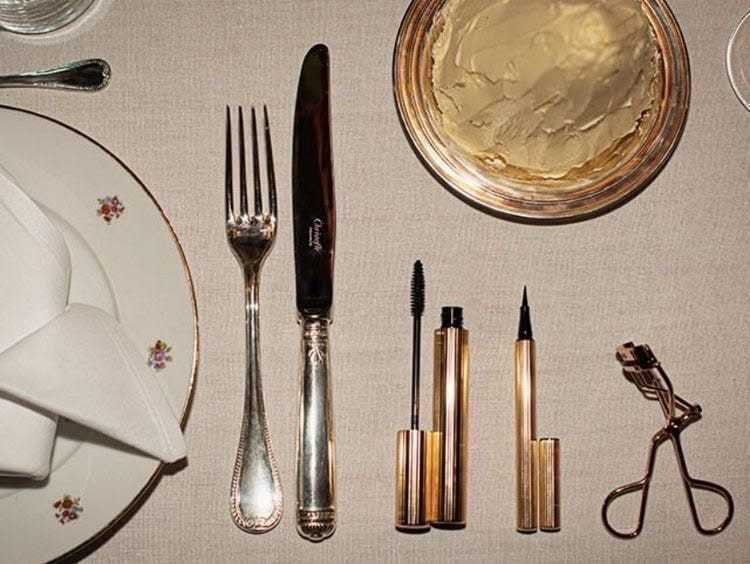
While reading and researching this week, I kept coming back to one piece of news: the world’s most valuable luxury group just spent around €23 million on a warehouse in the Tuscan hills. Not a flagship on Bond Street. Not a campaign with a supermodel. A workshop.
In late July 2026, Loro Piana, the house owned by LVMH since 2013, confirmed it is opening an 18,000-square-metre leather-goods facility in Barberino Tavarnelle, in the heart of the Chianti, on a site it bought from the family behind Furla for roughly €23 million. It opens in the first half of 2027. [1]

- [(Loro Piana’s future leather-goods facility in Barberino Tavarnelle, Tuscany] [(Il Sole 24 Ore)]*
It is not a one-off. Louis Vuitton is building one of the largest leather workshops in Italy in Sieci, a small town outside Florence, under an agreement with the Tuscany region that will nearly double LVMH’s local headcount. [2] It has already opened eco-designed ateliers in Vendôme, France, dedicated to leather goods. [3]
There is something worth sitting with here. The world’s largest luxury group is quietly investing in the ability to make its own products by hand, in the very regions that have shaped those traditions for generations. This is not simply a marketing decision. It is a decision about control, heritage, and the foundations that allow a brand to keep meaning something.
The strongest brands have always understood that desire is built long before a customer sees the final image. Luxury has mastered one side of the mirror: the world it creates for people to look at. But the brands shaping the future understand the other side too: the person looking back. Visibility, it turns out, has never been one-directional.
The supply side: LVMH
A label is only ever as strong as what is actually behind it.
It would be too easy to call the Tuscan workshops a story about authenticity. LVMH is not buying manufacturing simply so it can say its bags are made by real hands. It is buying control: over supply, over scarcity, over capacity, over the kind of know-how that cannot be repurchased once it has dispersed into other people’s factories. Craftsmanship is not really the point. Craftsmanship is control over the conditions that make authenticity possible. When you own the workshop, you own the pace at which the story can be told and the margin protected. Marketing stopped being enough on its own because a name is only as durable as the thing it is attached to.
This is the quiet, expensive lesson of luxury. You protect the meaning by investing beneath the surface, in the part the customer will never directly see, so that the surface has something to stand on.
The individual: Rhode
Newer brands have arrived at the same lesson, just by walking in through the other door. They are not investing beneath the brand; they are investing inside the person.
Because people rarely buy from brands that simply understand them. They buy from brands that make them feel understood.
Ask a typical lip-gloss brand who its customer is and you will probably get: “women in their twenties.” A neat little demographic box. A number. An age bracket. Useful for a spreadsheet, perhaps. Less useful for understanding an actual human being.
Rhode knew a person. Not just a woman in her twenties, but a woman with a very specific everyday reality: someone who wants to feel polished, even when convenience matters more than a full beauty routine. That single insight is the only reason the Rhode phone case exists: a silicone iPhone case moulded to hold a Peptide lip treatment on the back. It launched in early 2024, went viral almost at once, and the design was distinctive enough that the company patented it. [5] A year later, e.l.f. Beauty acquired Rhode in a deal worth around a billion dollars. [6]
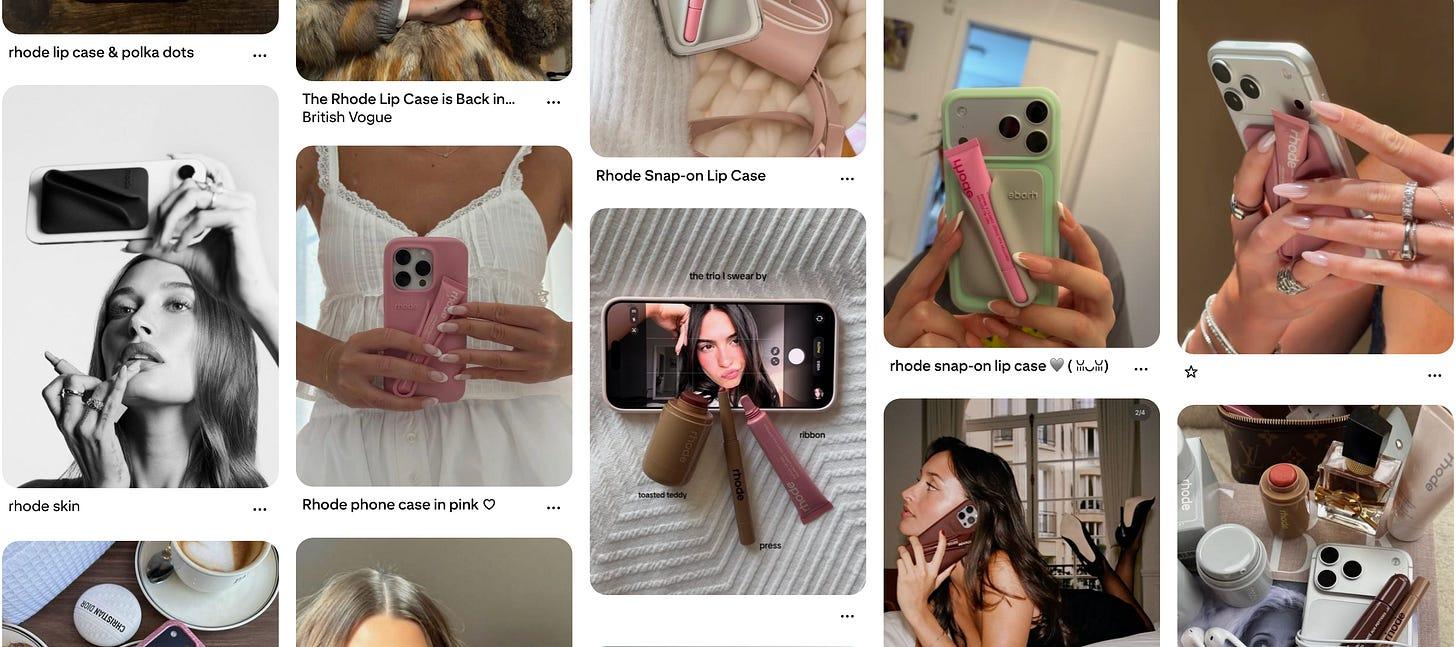
- [Rhode Peptide Lip Treatment phone case (] [Pinterest)]*
A phone case that holds a lip gloss makes no sense until you understand who you are building it for. Then it makes perfect sense. One brand knows an age range. The other knows a person.
The brands that truly understand people rarely begin with a survey. They begin by paying attention. They notice the language people use when they think nobody is watching: the Reddit confession, the saved Instagram post, the comment left under a video at one in the morning. Before someone becomes a customer, they are already revealing something about the person they want to become. The work is not about extracting answers. It is about noticing the things people tell you without realising they are telling you.
The community: Merit
Merit is perhaps the clearest example of this, and the most revealing, because it built the understanding before it built anything else.
Before Merit was a brand, before it had a product, a logo, or even a face, founder Katherine Power built something less tangible: an audience gathered around a feeling. A few months ahead of launch she put up an Instagram account under the handle @____mood: a mood board. [7] No product. Just reposts about sustainability, about the everyday routine, about a way of seeing. And she watched. What got reposted, what got saved, what people said in the comments. Every post was a test, and with each one the positioning grew sharper.
By early 2021 that account had more than 10,000 followers waiting on a brand that did not officially exist yet. [7] Then, almost overnight, she turned the mood board into Merit and announced there was a brand. Two weeks later the product went live on Merit’s own site. By Power’s own account, it did $100,000 in sales on the first day. [8] That day the site sold a Merit product every 17 seconds, and it held close to that pace long after. [7]
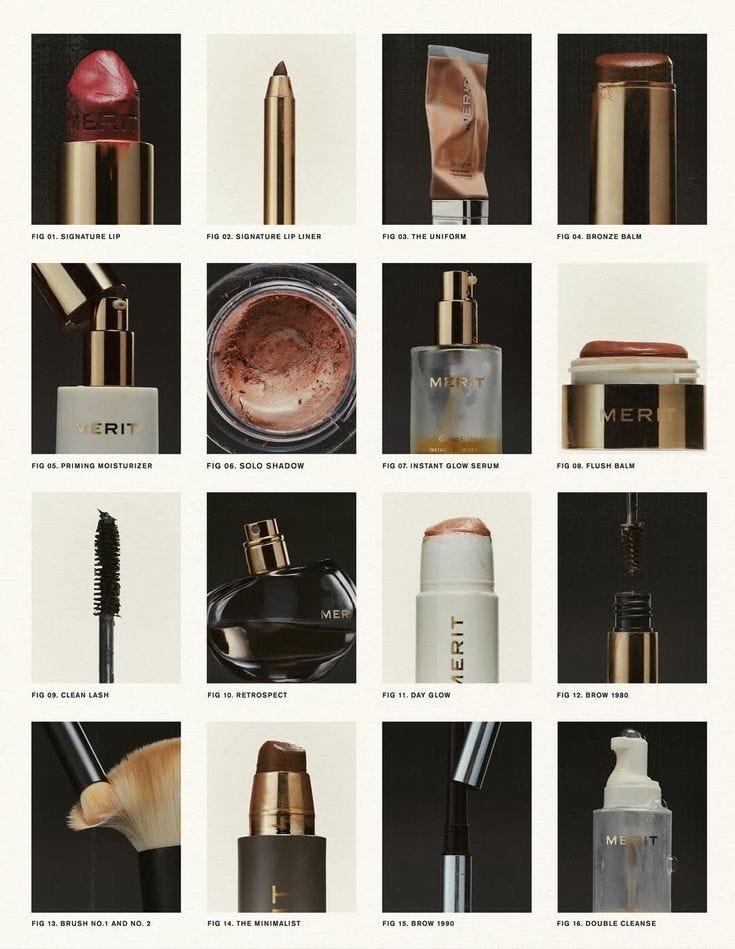
- [Merit Beauty imagery] [(Instagram)]*
It would be easy to misread this as a case for the product not mattering. It did. A beautiful Instagram account cannot rescue a bad lipstick, no matter how carefully curated the mood board is. Merit had the formulation, the positioning, the distribution, and a founder with enough credibility to bring the whole thing to life.
But the lesson is not that product comes second. It is that meaning often arrives first.
Power did not create something and then hope people would find a reason to care. She created a shared understanding of what the brand stood for, listened closely, and let that shape what came next. By the time Merit launched, thousands of people already felt recognised. The purchase was not the beginning of the relationship. It was simply the moment the relationship became tangible.
Look again at what these three brands have in common.
LVMH is protecting meaning by investing beneath the brand: the workshops, the craftsmanship, the hands that make the name worth believing in. Rhode and Merit are protecting relevance by investing inside the consumer: the habits, desires, and values that make someone feel like a brand was created with them in mind.
Different industries. Different strategies. The same underlying idea: understanding is the foundation.
LVMH says, in effect: we understand what luxury means, and we will protect the conditions that allow it to keep meaning that. Rhode says: we understand your everyday life. Merit says: we understand the world you want to belong to.
None of them wins by simply being louder. They win by making someone feel recognised. The customer sees something familiar reflected back at them, while behind the name sits the work that made that recognition possible. Luxury has spent decades perfecting the first side. The brands worth watching now understand the second.
Because visibility was never really about being everywhere. It was about being recognised somewhere, deeply enough that people remember why you matter.
A brand can be seen. It can be documented. It can be found. But none of that lasts unless, when someone finally looks closer, there is something real looking back.
-AE.
Notes:
The three core stories, the customer-insight argument, the Merit launch, and the LVMH manufacturing push, come from the original source material. The specifics and figures below were verified against reporting rather than taken from memory.
-
Loro Piana (owned by LVMH since 2013) is opening an approximately 18,000 m² leather-goods and accessories facility in Barberino Tavarnelle, in the Florentine Chianti, on a site formerly belonging to the Furlanetto family (owners of Furla), for around €23 million, with operations beginning in the first half of 2027. Sources: Il Sole 24 Ore; MilanoFinanza; La Nazione [2]
-
Louis Vuitton’s workshop in Sieci (Pontassieve, near Florence) is set to be the largest in Italy dedicated to making its leather goods, under a three-year Memorandum of Understanding with the Tuscany region expected to raise LVMH’s regional workforce from 270 to 450. Source: Reuters, via Business of Fashion
-
Louis Vuitton’s eco-designed leather ateliers in Vendôme, France (including the “Oratoire” site at Azé) were built to lower energy consumption through natural ventilation and light, and specialise in leather goods. Sources: Louis Vuitton; WWD
-
LVMH is the world’s largest luxury goods group. As of early August 2026 its market capitalisation was approximately €239 billion (about $275 billion), a figure that moves daily with the share price and sits well below the group’s 2023 peak. The “€300 billion” figure sometimes quoted reflects that earlier high rather than the current valuation. Source: Morningstar
-
The Rhode “Lip Case,” a silicone iPhone case moulded to hold the brand’s Peptide Lip Treatment or Tint, launched in February 2024 at around $38, sold via a waitlist, went viral, and the design was patented. Sources: Marie Claire; Rolling Stone
-
In May 2025, e.l.f. Beauty (NYSE: ELF) announced a definitive agreement to acquire rhode, the brand founded by Hailey Bieber, in a deal worth up to $1 billion: $800 million payable at closing plus a potential $200 million earnout tied to the brand’s growth over three years. Sources: e.l.f. Beauty press release via Business Wire; CNBC
-
Merit, founded by Katherine Power, launched in January 2021. Before launch, Power ran a teaser Instagram account under the handle @____mood, telling the brand’s story and building an audience that exceeded 10,000 followers ahead of debut; the direct-to-consumer site went live on 11 January 2021, and the brand sold a product every 17 seconds on launch day. Sources: Forbes; Retail Dive
-
The pre-launch strategy of building an audience through the @____mood account before revealing Merit as a brand is reported by Forbes, which quotes Power on the mood board and the more than 10,000 followers anticipating the debut, and Power’s customer-first, audience-led method across her brands is documented by Fortune. The finer mechanics described here (treating each post as a test and reading engagement to sharpen positioning) and the “$100,000 in sales on the first day” figure come from Power’s own retelling in interviews; independent reporting confirms the launch momentum (a product sold every 17 seconds, see note 7) but not the specific first-day dollar amount.
First published by Third Row Thinking on 7 August 2026.
Free newsletter
The NOOR Edit
Liked this? Get NOOR’s best stories by email.