
Marble Pretending to Be Silk
At the Met’s Costume Art show, almost every dress stands beside a sculpture, a vase or a painting. Third Row Thinking came home with 144 photographs and an answer to an old argument.
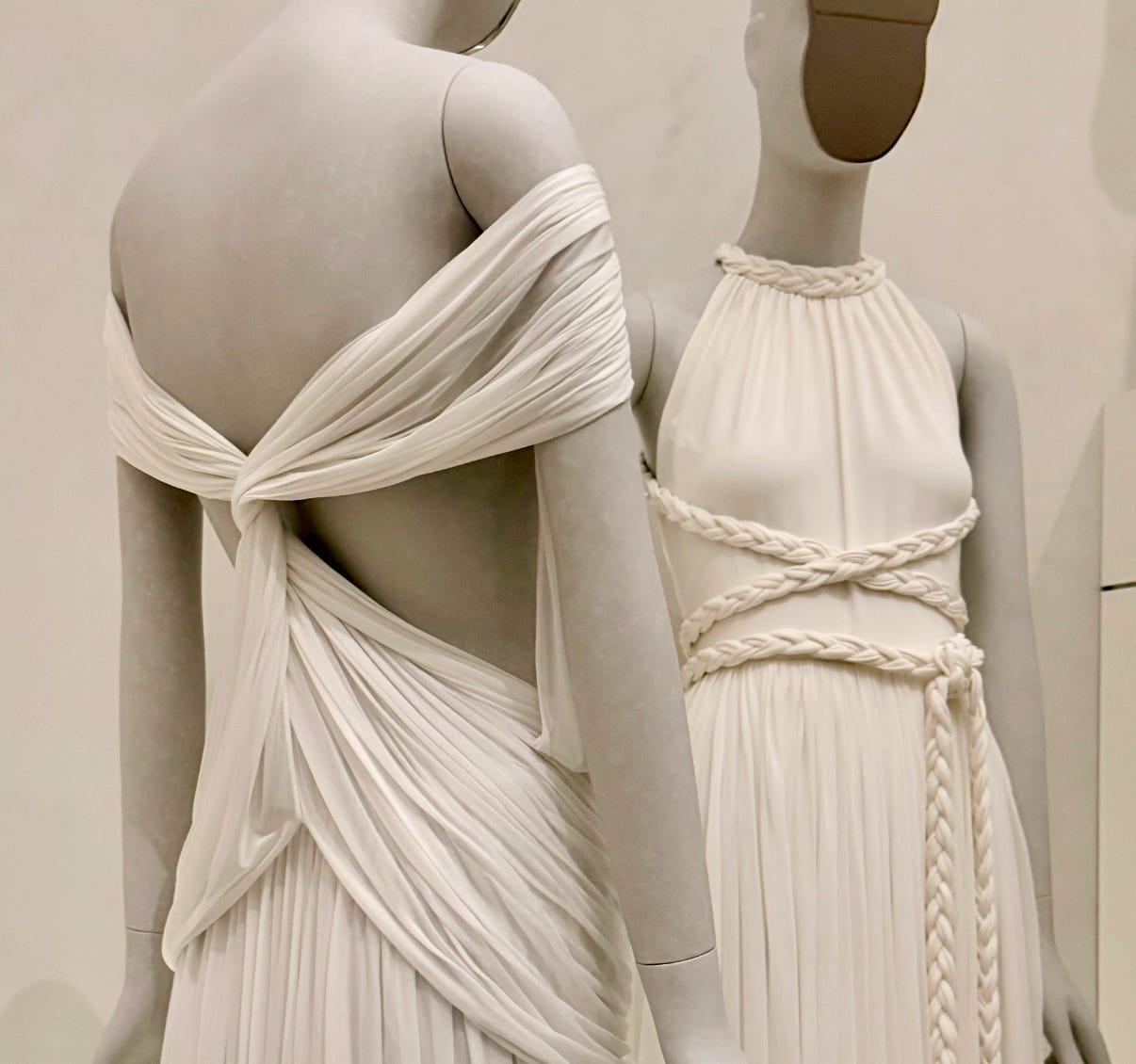
At the Met, getting too close has a soundtrack. Lean in to work out how a marble veil can possibly look that thin, and a voice comes over the speakers asking you to step away from the exhibit. The Costume Institute’s Costume Art show, in brand new galleries just off the Great Hall, is that feeling with the lights turned down.
I didn’t go in with a plan. I just photographed whatever stopped me. Something intricate, something beautiful, something I wanted to remember the shape of. By the end, I had 144 pictures and no regrets about the $30 it cost to get in.
It wasn’t until later, flicking back through my camera roll, that I saw what the curators had been up to. Hardly anything in the show is left on its own. Almost every dress has a companion pulled from the museum’s permanent collection: a marble figure, a Greek vase, an engraving, even a Van Gogh. A red gown from 2022 shares the frame with a carving from the 1300s. A 1980s bustier sits beside a breastplate that’s more than two thousand years older.
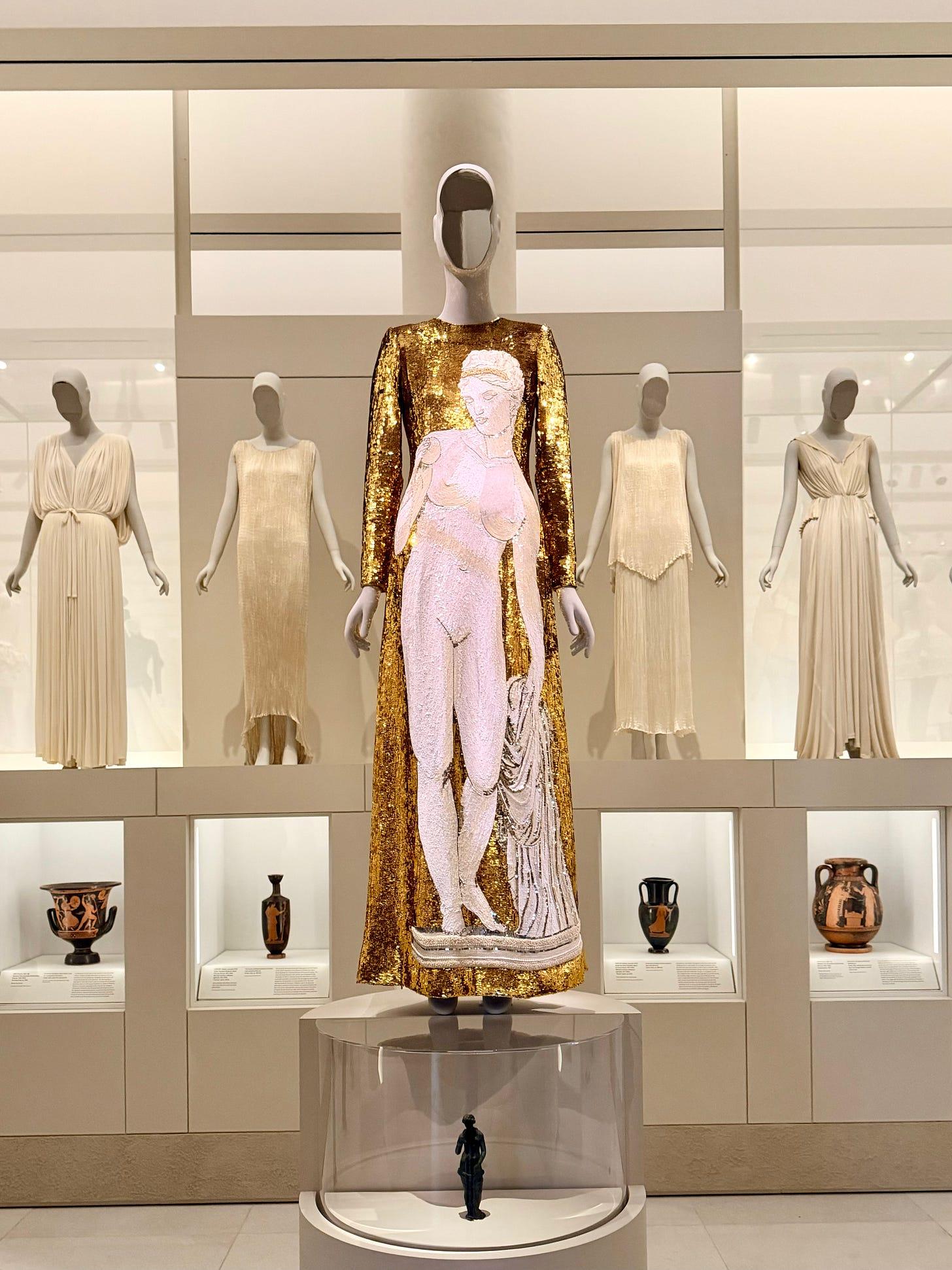
The pairings aren’t a side note. They are the show. And without making a fuss about it, they settle an argument that’s been going on for a very long time.
The old argument
Is fashion art? It sounds like a dinner-party question, but people have argued about it for centuries.
Immanuel Kant set the tone in 1790. In his Critique of Judgment he listed things that sit around a work of art without really being part of it, which he called parerga. One was the frame of a painting. Another was the drapery on a statue. The clothes, in other words, were the extra bit.
Nearly two hundred years later, the argument arrived at the Met itself. In 1983 the Costume Institute gave Yves Saint Laurent a retrospective, and many art historians were scandalised. A living designer, selling clothes, in an art museum? It still hasn’t been settled. Valerie Steele, who runs the museum at New York’s Fashion Institute of Technology, says “there is by no means a consensus that fashion is art,” and plenty of designers, from Karl Lagerfeld to Rei Kawakubo, have refused the label.
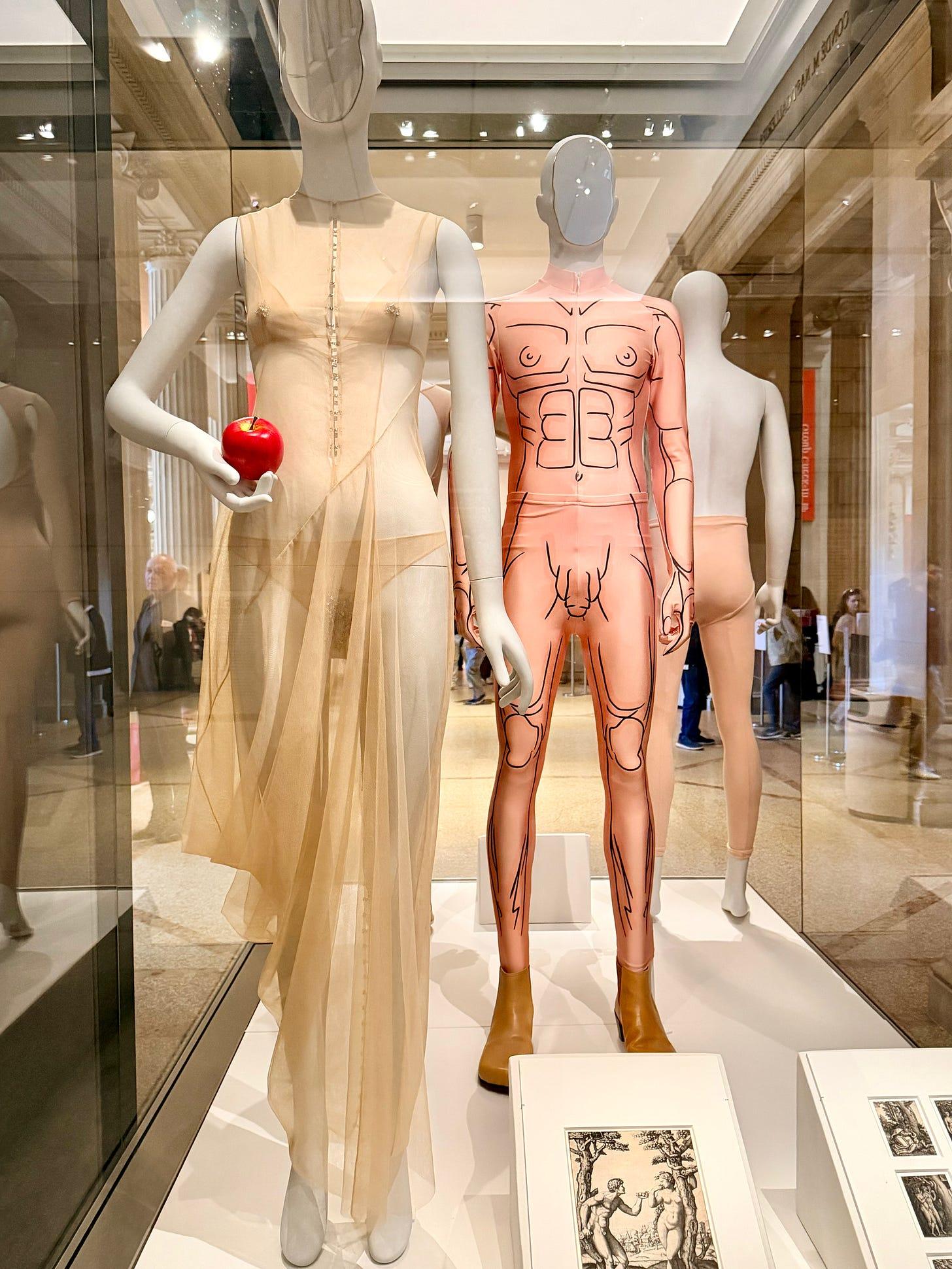
My favourite answer comes from someone who changed the question. The art historian Anne Hollander, in Seeing Through Clothes (1978), argued that painting and dress have always shaped each other. Paintings teach us what a body is supposed to look like, and we dress to look right by the pictures’ standards. Even the nudes, she wrote, are “wearing the ghosts of absent clothes.”
Four conversations I didn’t expect:
Stone pretending to be silk
Raffaello Monti’s The Veiled Woman (1854) is a marble girl under a veil so thin you can see her face through it. It’s stone. It looks like you could lift it off.
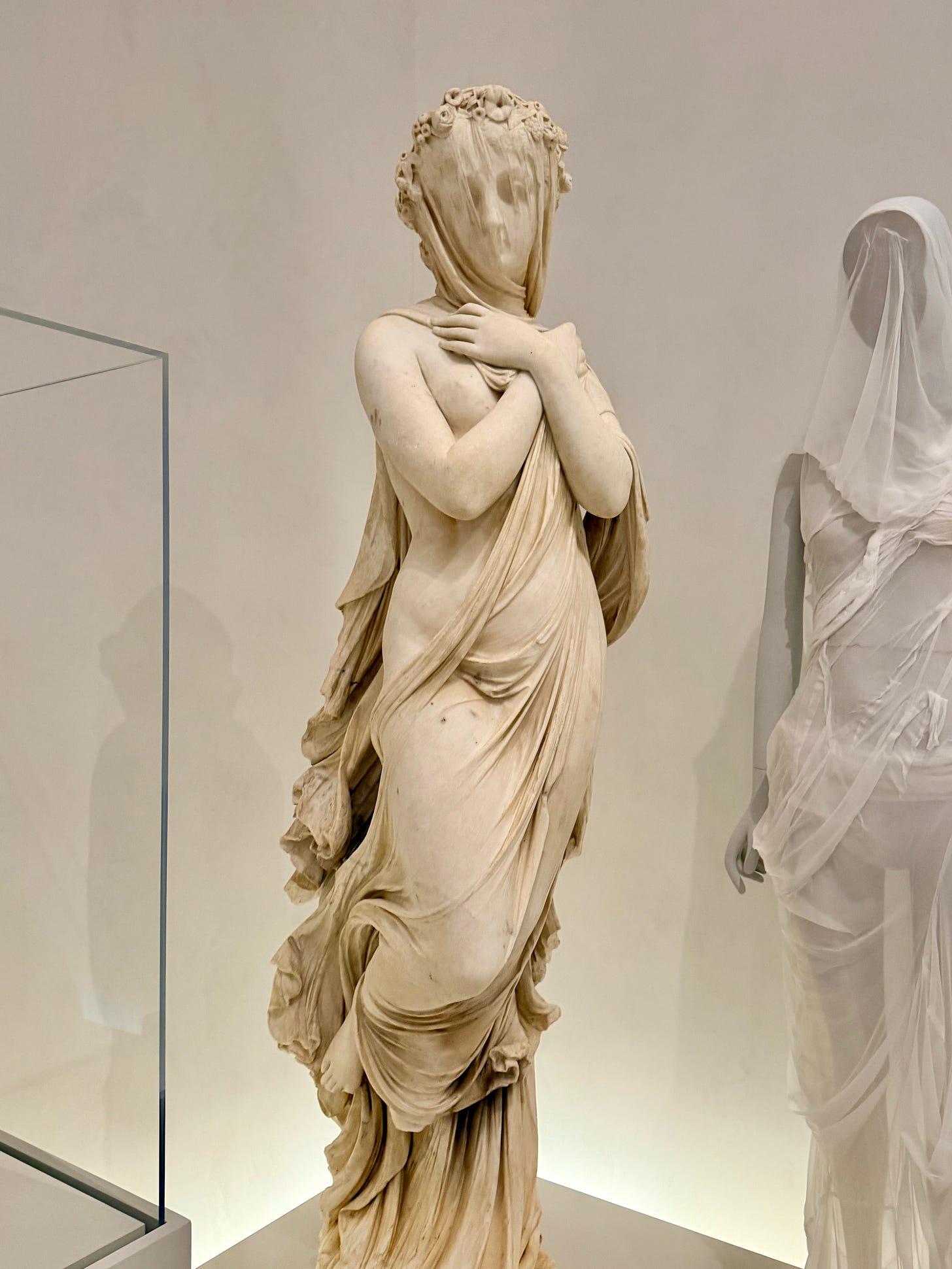
Next to her is a John Galliano dress for Maison Margiela (autumn/winter 2020-21 couture) that does the exact opposite. It’s sheer silk gauze, cut in circles and layered until it looks carved. The label has a lovely term for this: wet drapery. It comes from ancient Greek sculpture, where carved cloth clings so closely that you can see the body underneath. A few steps away, the designer Dimitra Petsa of Di Petsa does it for real. She drapes wet mesh straight onto the body and sews every ripple in place by hand. Her dress stands beside a cast of a Nereid, a sea nymph, from a Greek monument built around 390 BCE.
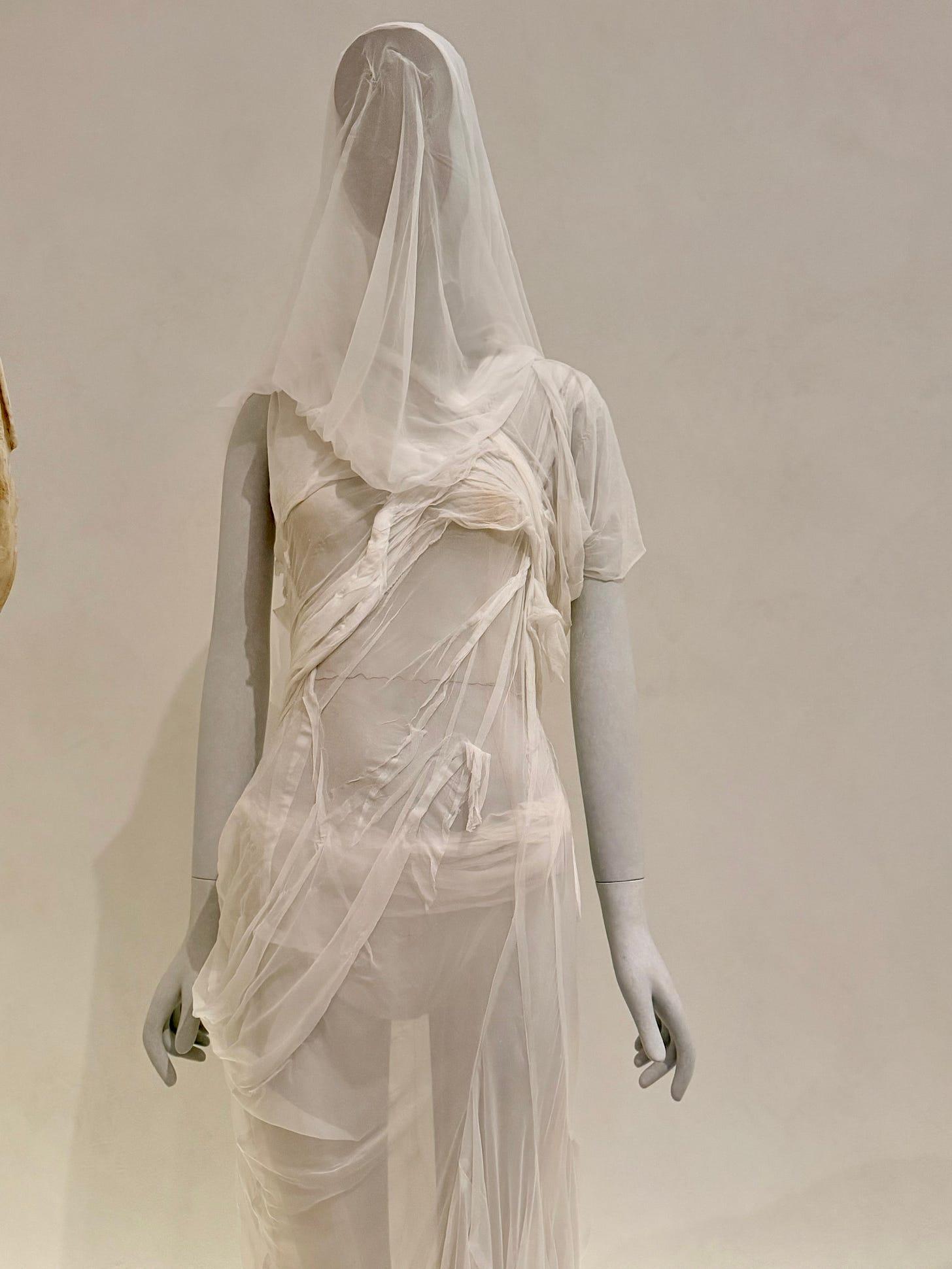
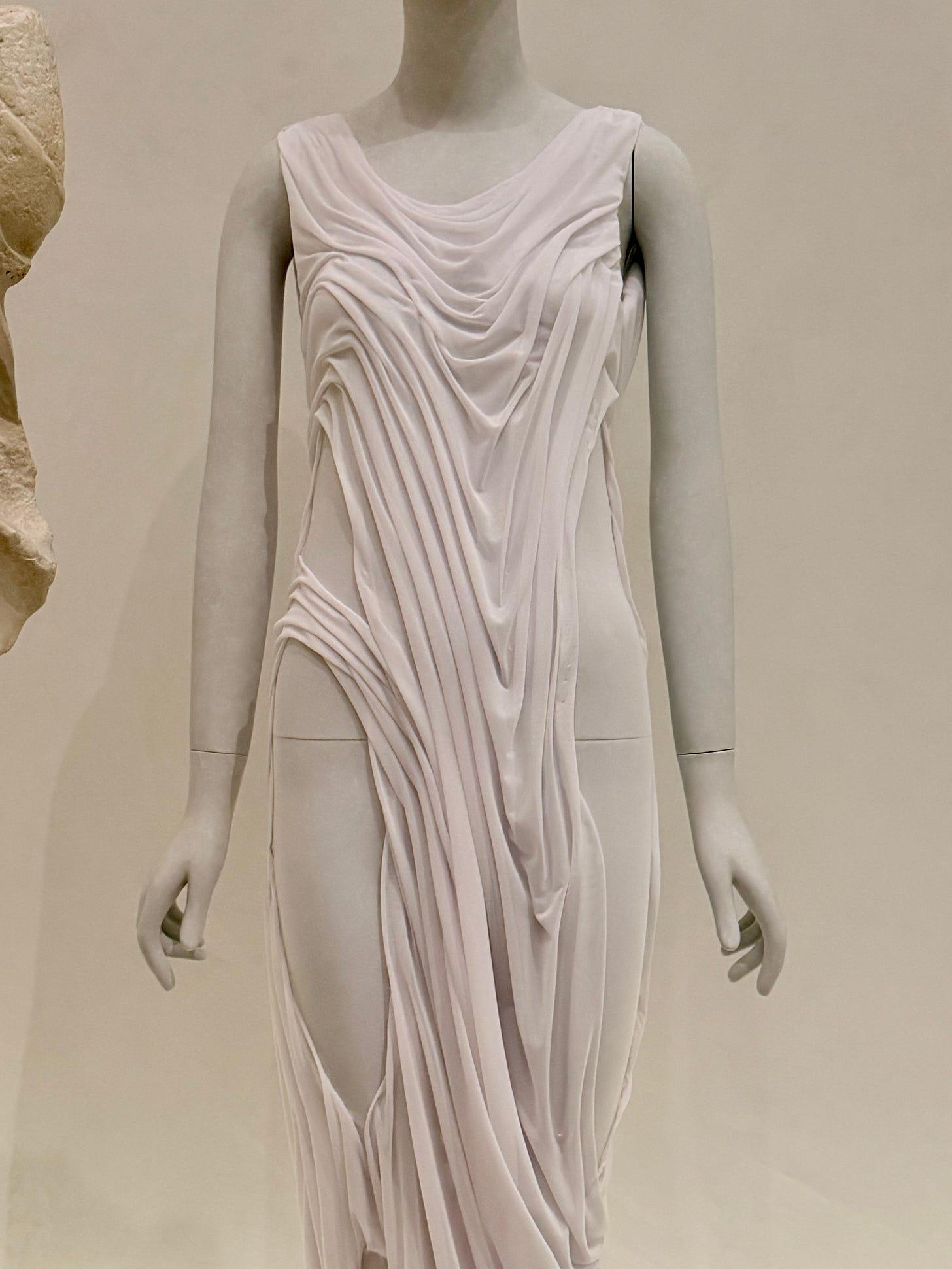
Kant called the drapery on a statue an extra. Standing there, it looked like the hardest thing in the room to make.
A painting you can wear
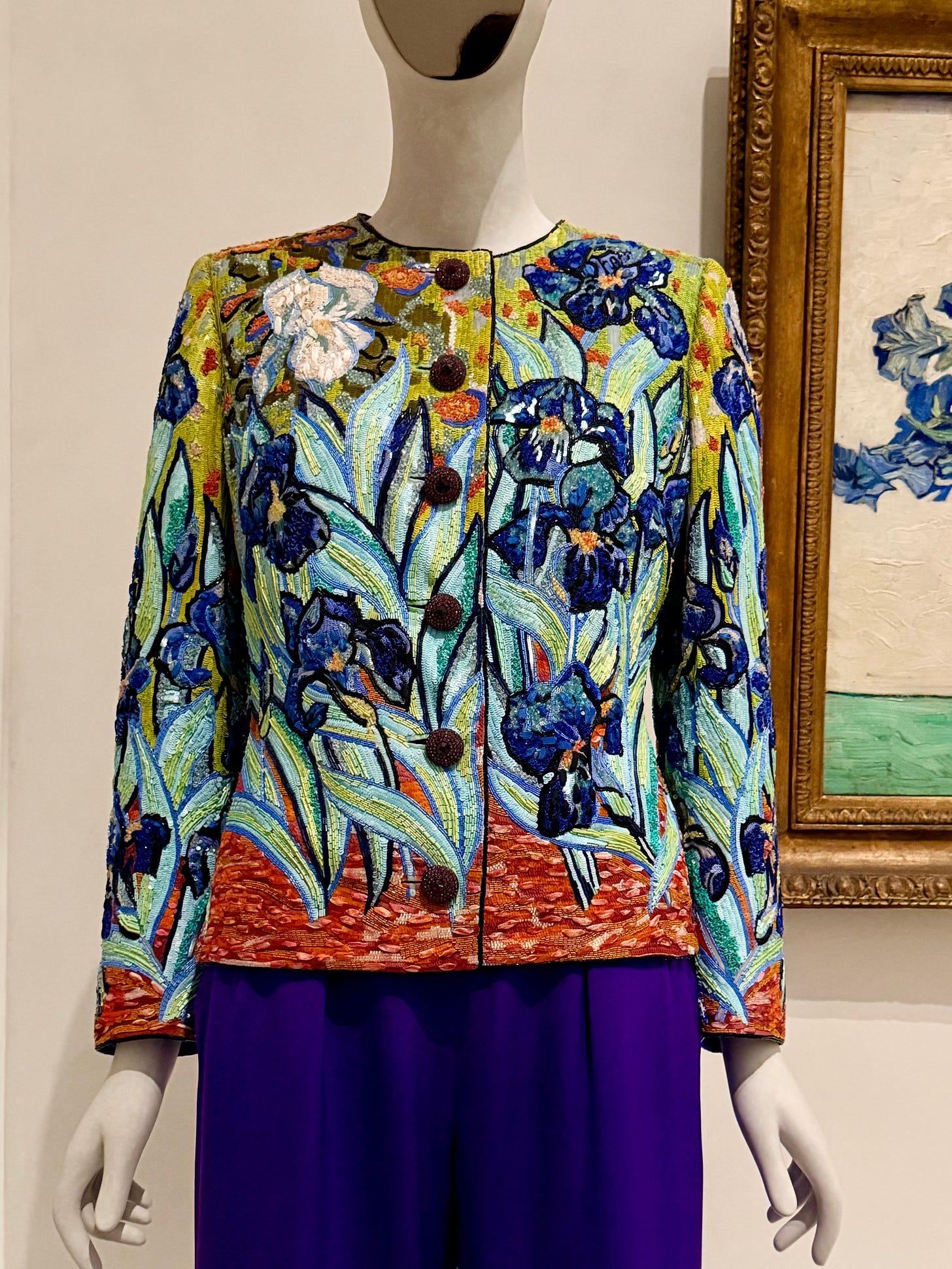
One wall holds Van Gogh’s Irises, painted in 1890 in the garden of the asylum at Saint-Rémy, while he was a patient there. In front of it stands a jacket.
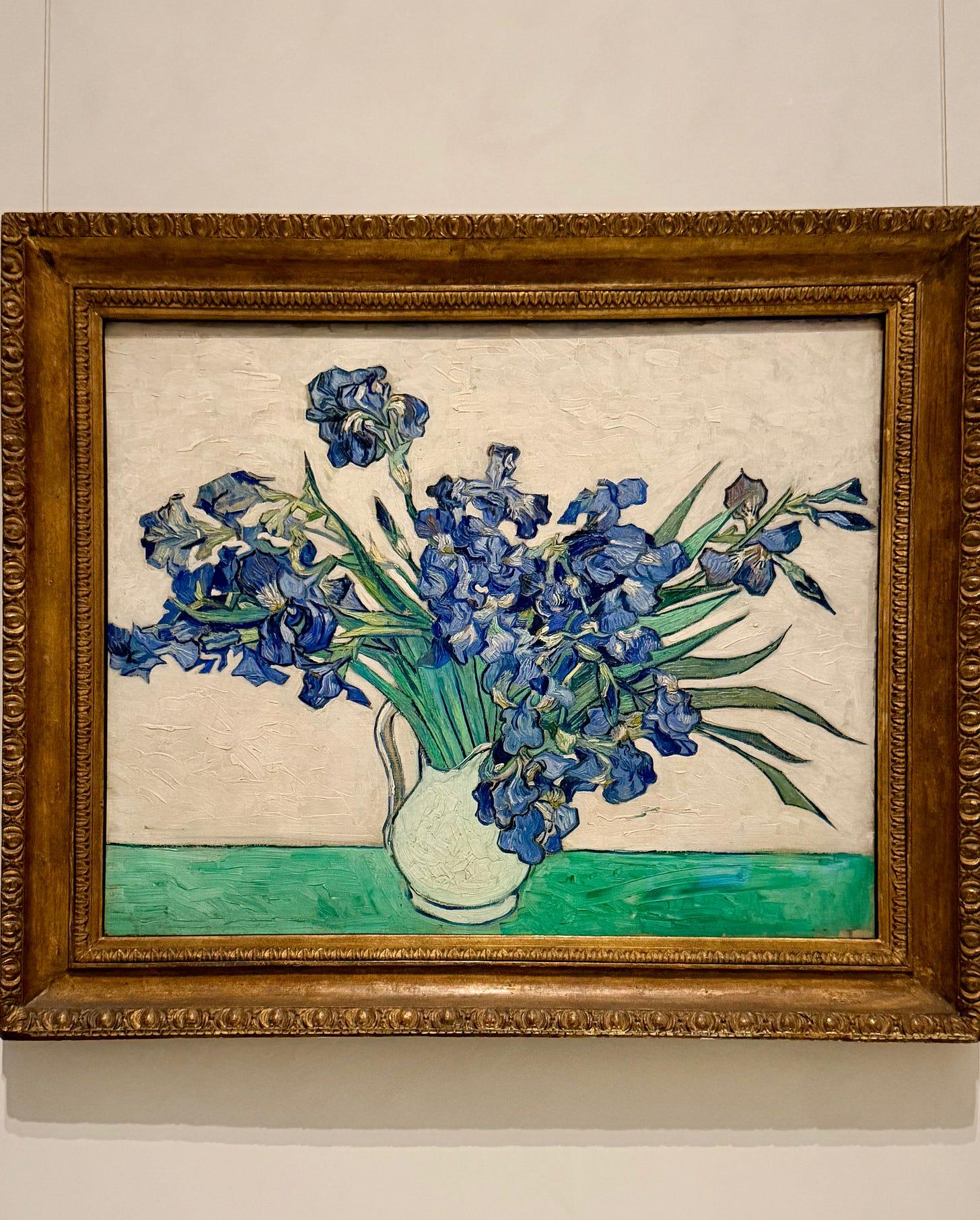
It’s Yves Saint Laurent’s, from his spring/summer 1988 couture collection. The irises are embroidered in silk ribbon, and the label says it took six hundred hours of handwork. The label also points out something you’d never guess from how joyful it looks: Saint Laurent, like Van Gogh, struggled with his mental health for most of his life.
Painters as fashion reporters
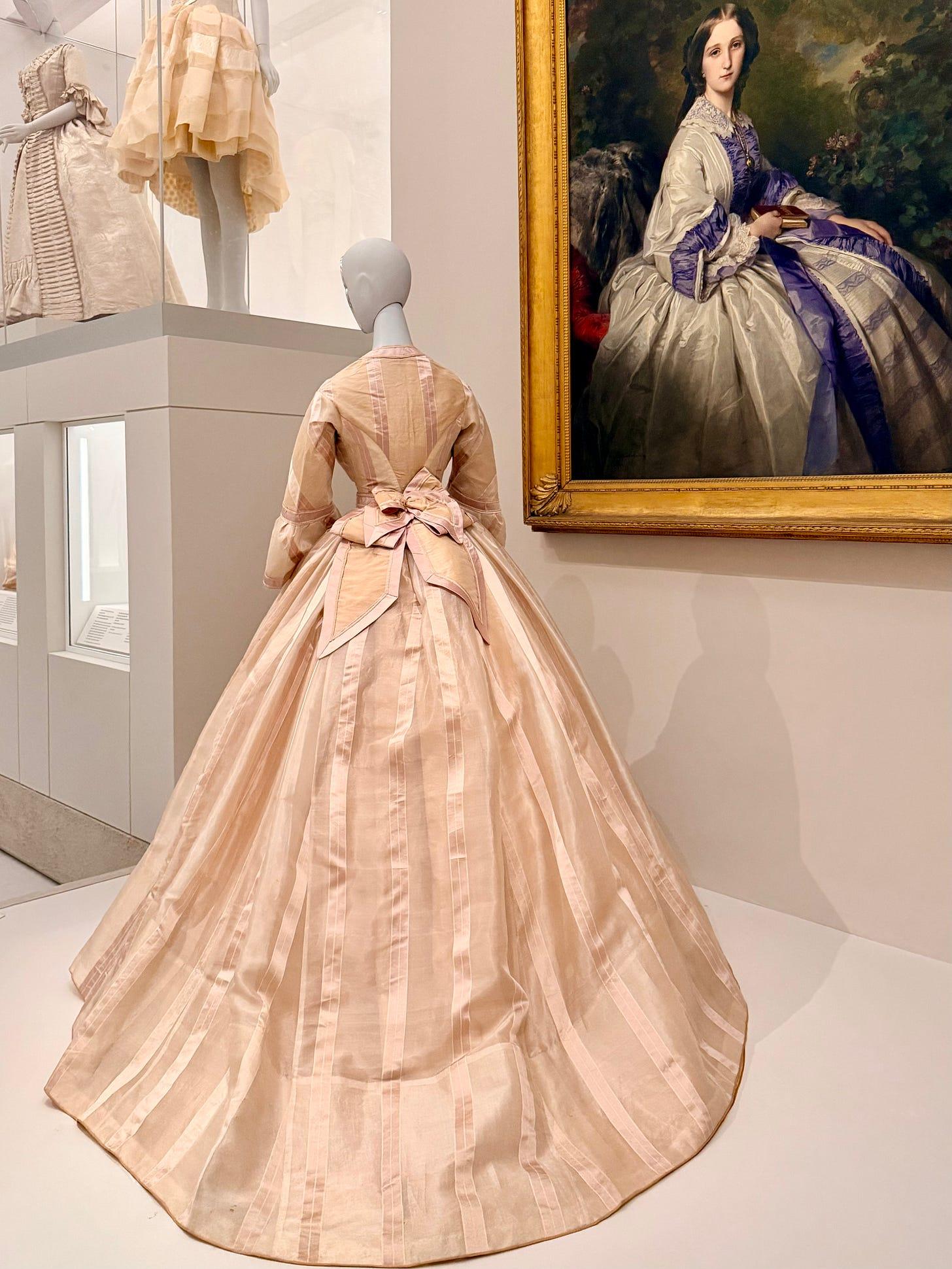
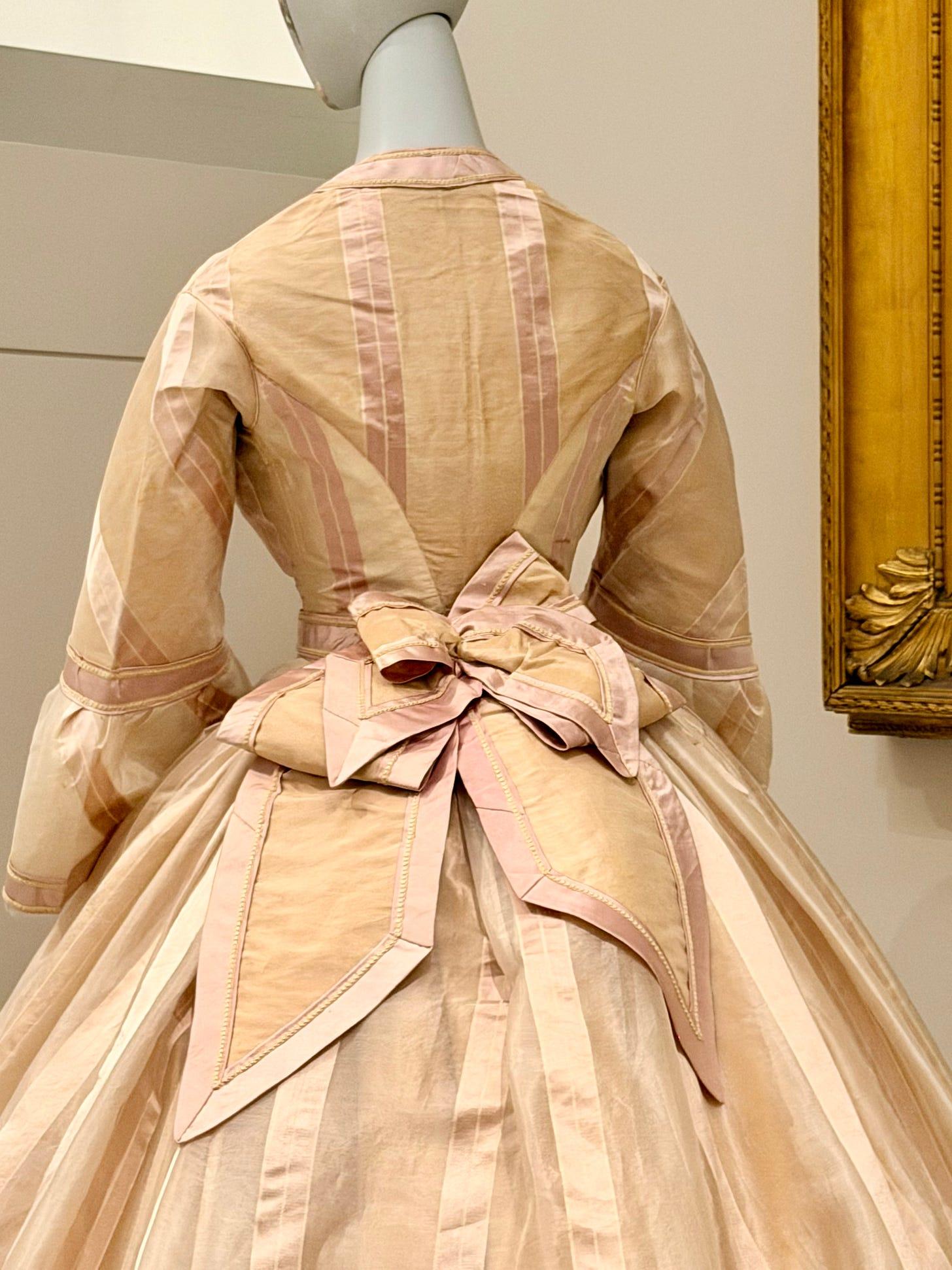
Franz Xaver Winterhalter painted queens and countesses in the mid-1800s, and his portraits are basically fashion photography before cameras could do it properly. His 1859 portrait of a Russian countess hangs above a real dress from around 1865, with the same huge bell-shaped skirt held out by a crinoline.
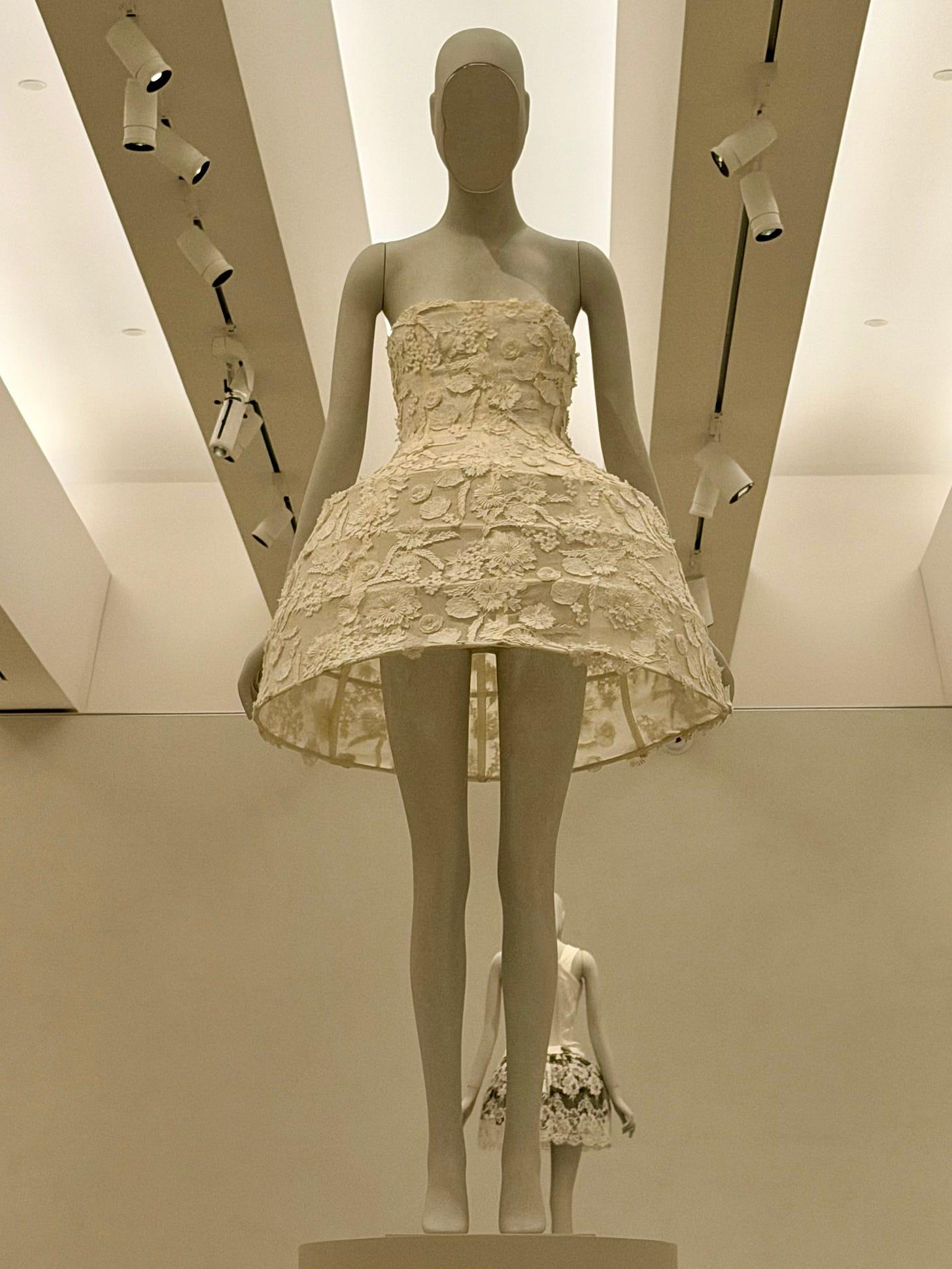
Nearby is a print from 1777 called Les Adieux. A woman is leaving a room, and her skirt, held out by hoops called panniers, is so wide she has to go through the doorway sideways. It hangs beside a Dior dress from 2023 by Maria Grazia Chiuri, built on a hooped frame inspired by Catherine de’ Medici.
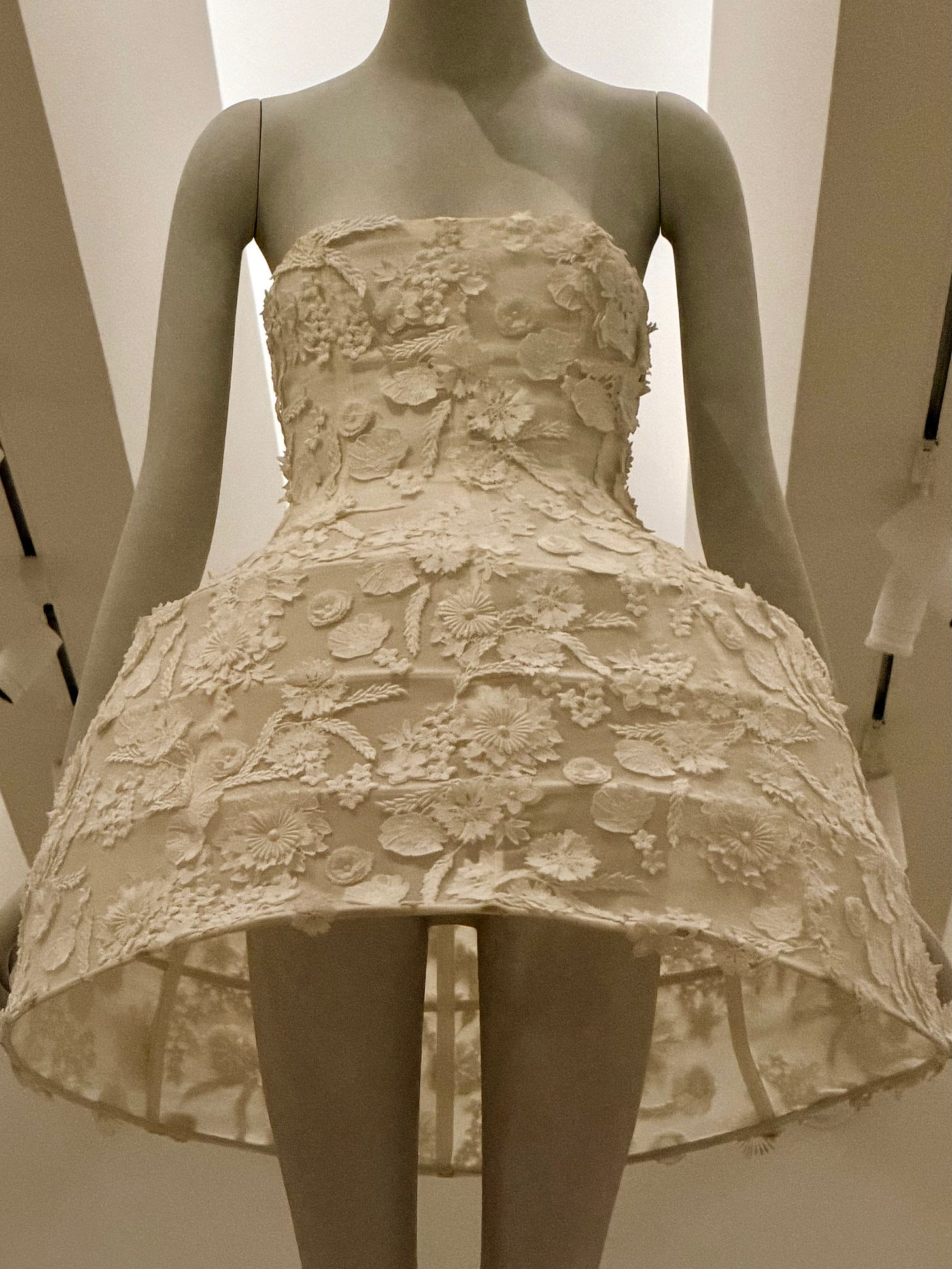
Same instinct, centuries apart
Some pairings aren’t about copying at all. They’re two people, centuries apart, having the same idea.
Thierry Mugler’s green bustier from 1980 is moulded leather and fibreglass, shaped like a muscled chest.
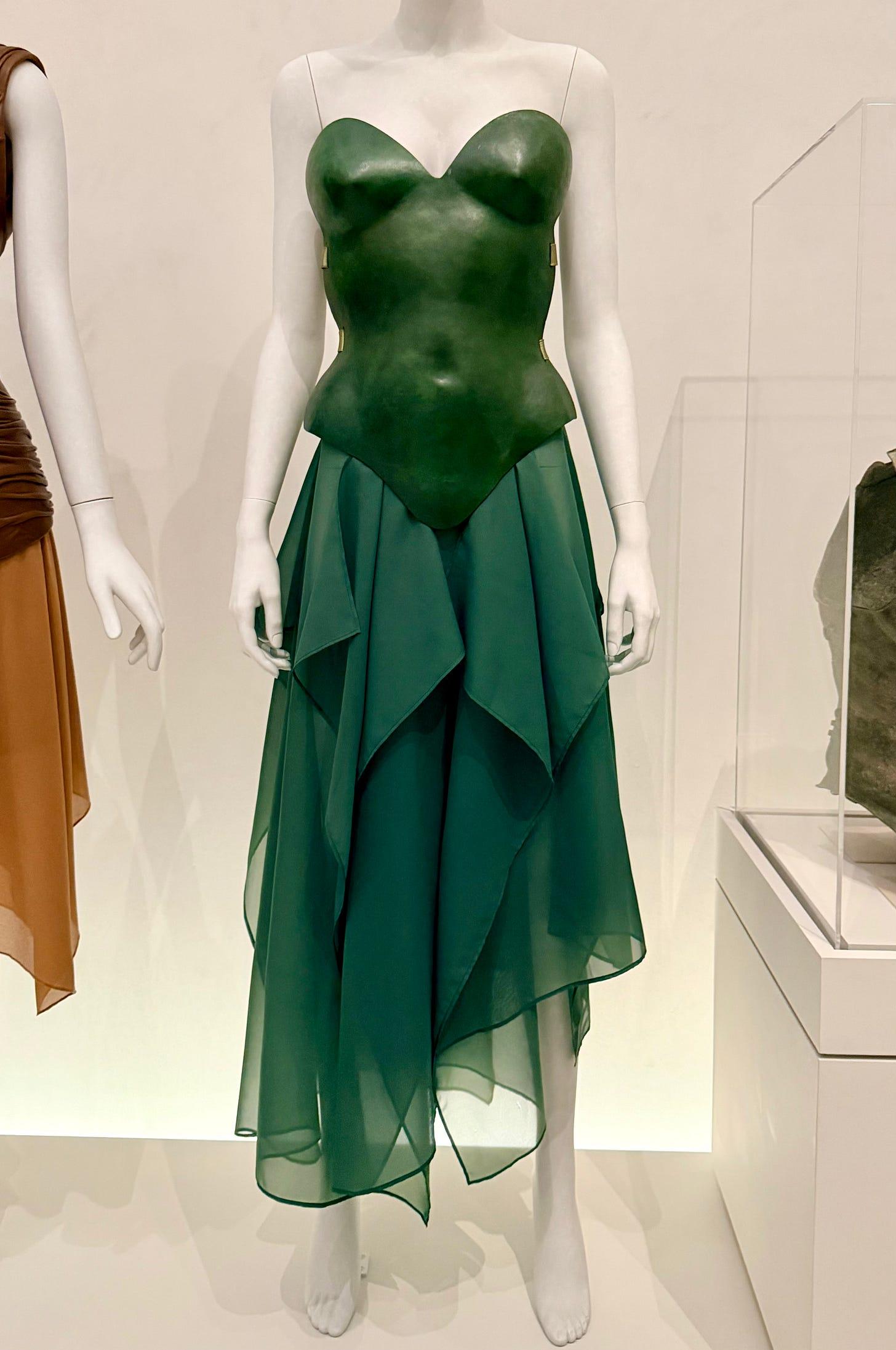
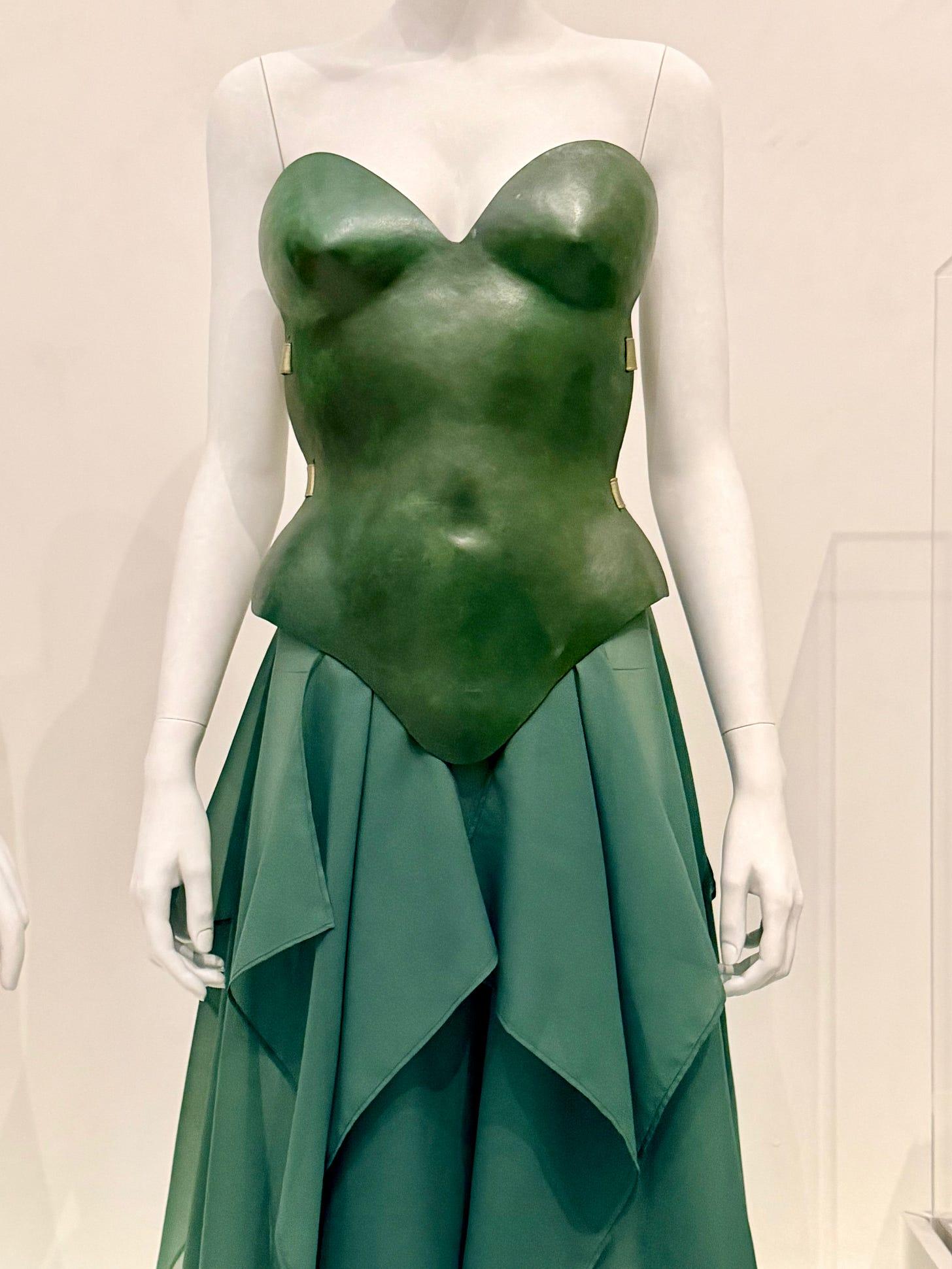
Beside it is a Greek bronze breastplate from the fourth century BCE. “The greatest tribute I can offer to women,” Mugler once said, “is to sculpt the shapes of their bodies.”
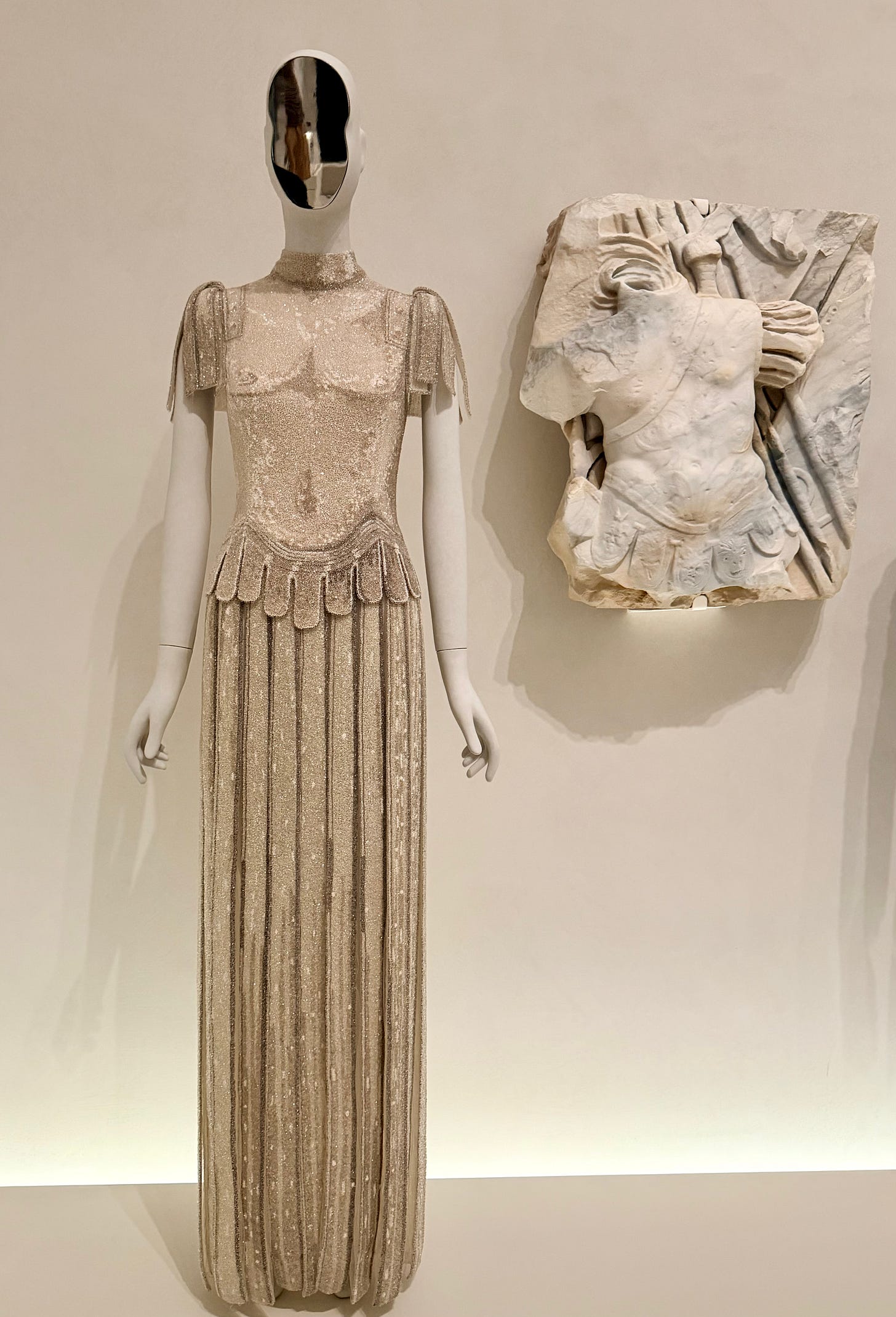
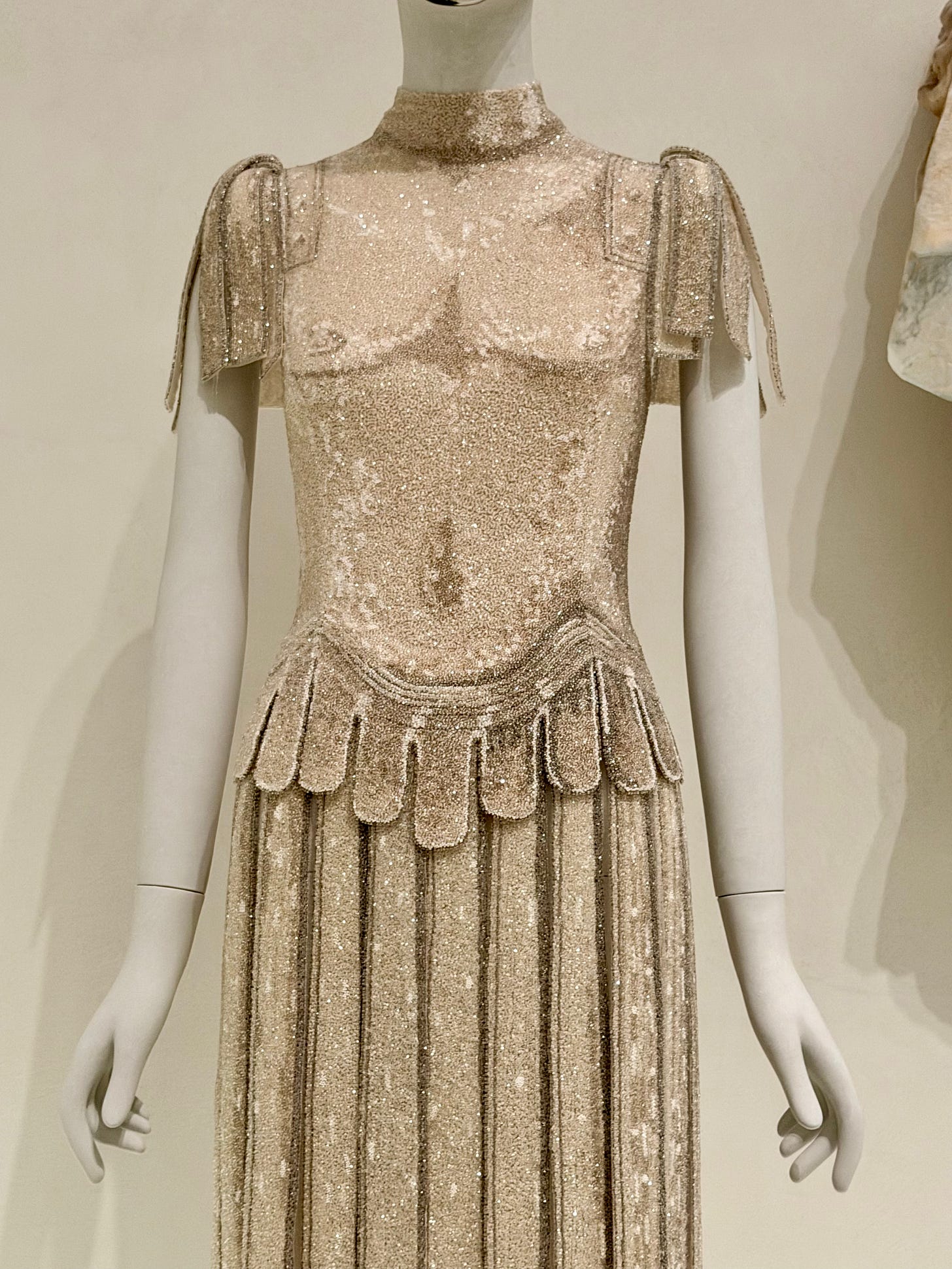
Maria Grazia Chiuri’s gown for Dior, from resort 2026, takes the same idea and makes it sparkle. Thousands of glass beads trace a breastplate over the body. Beside it hangs a replica of a Roman trophy relief, the kind of monument the ancients built out of a defeated enemy’s armour. It’s where the English word trophy comes from.
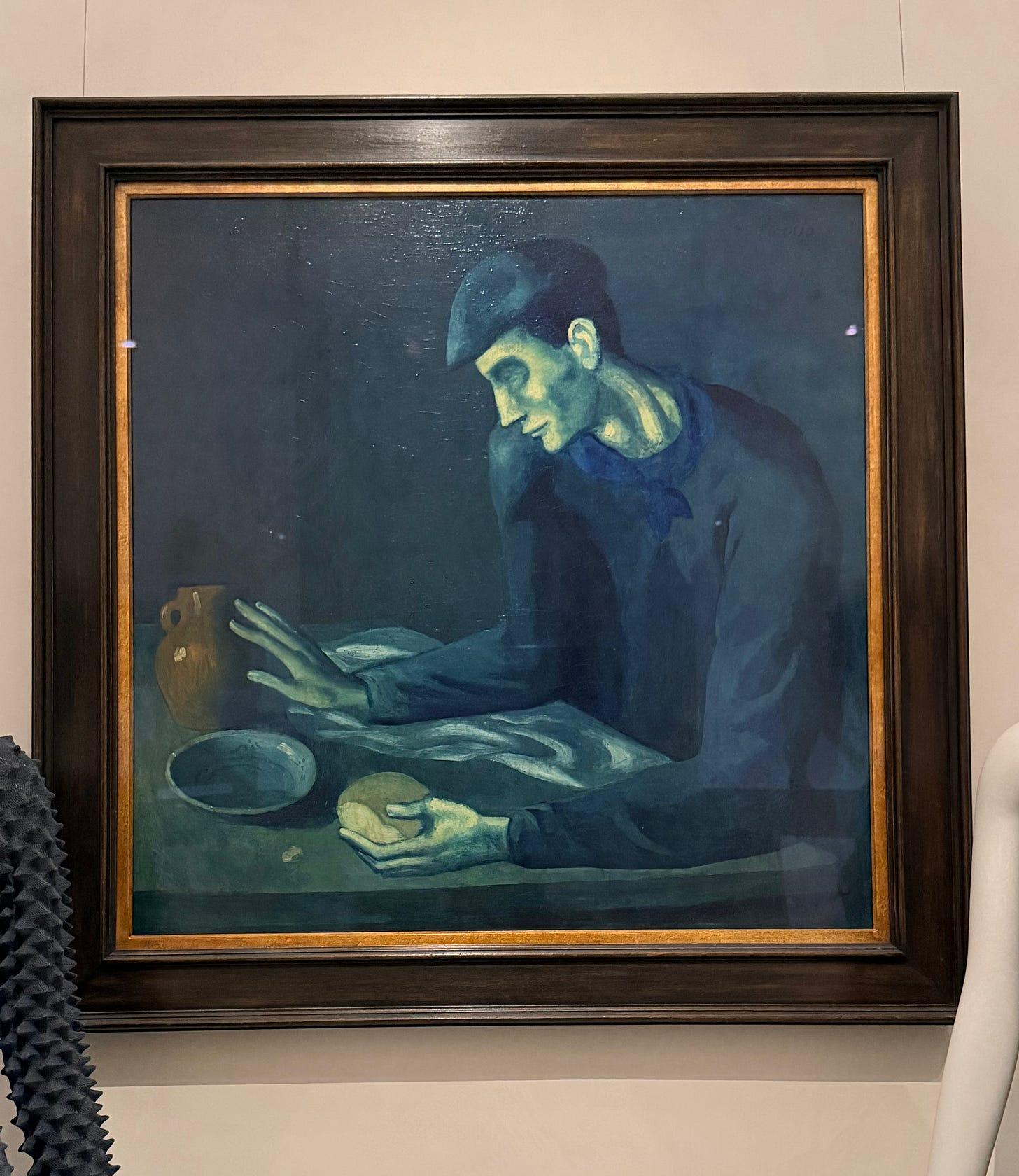
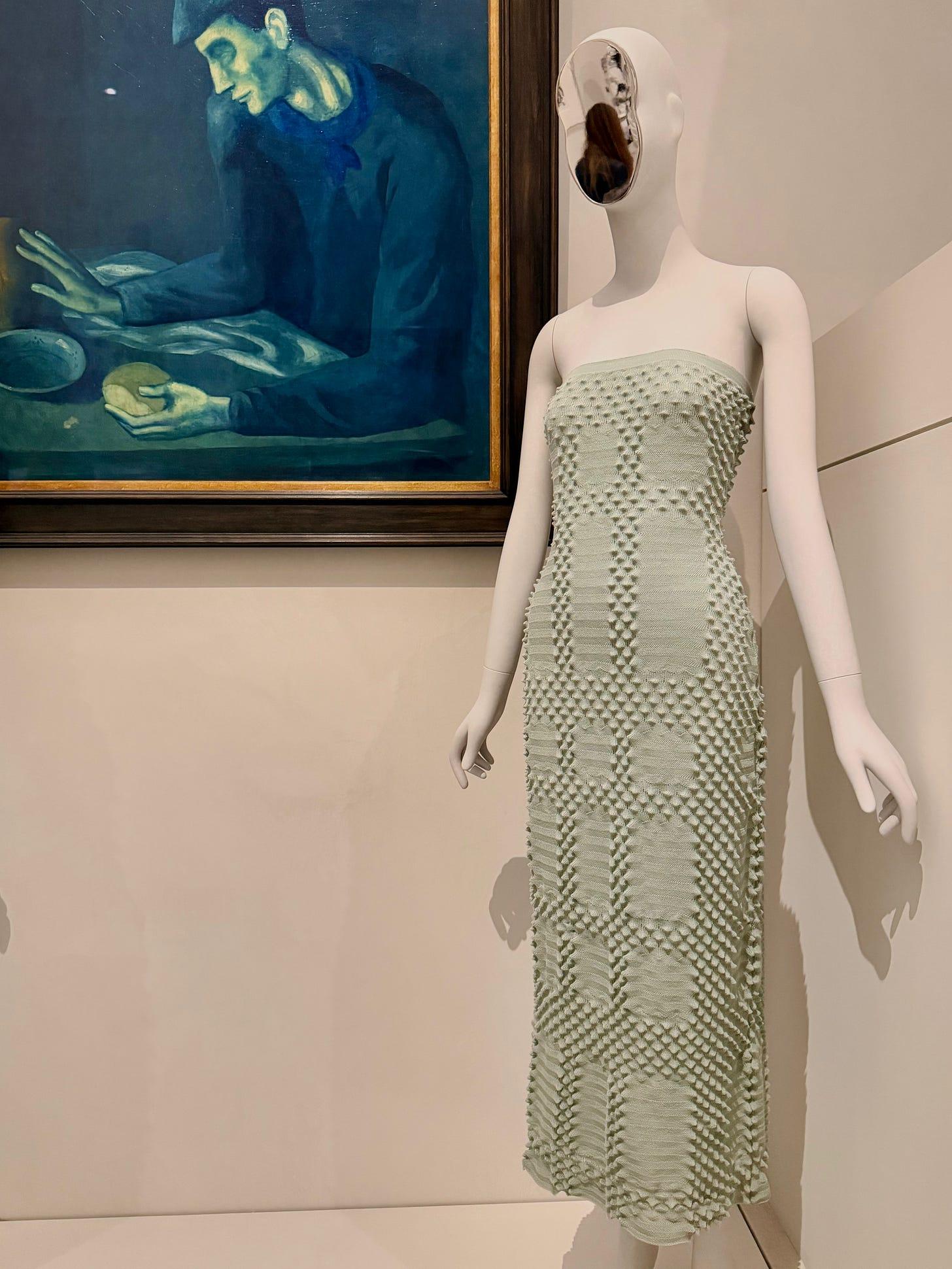
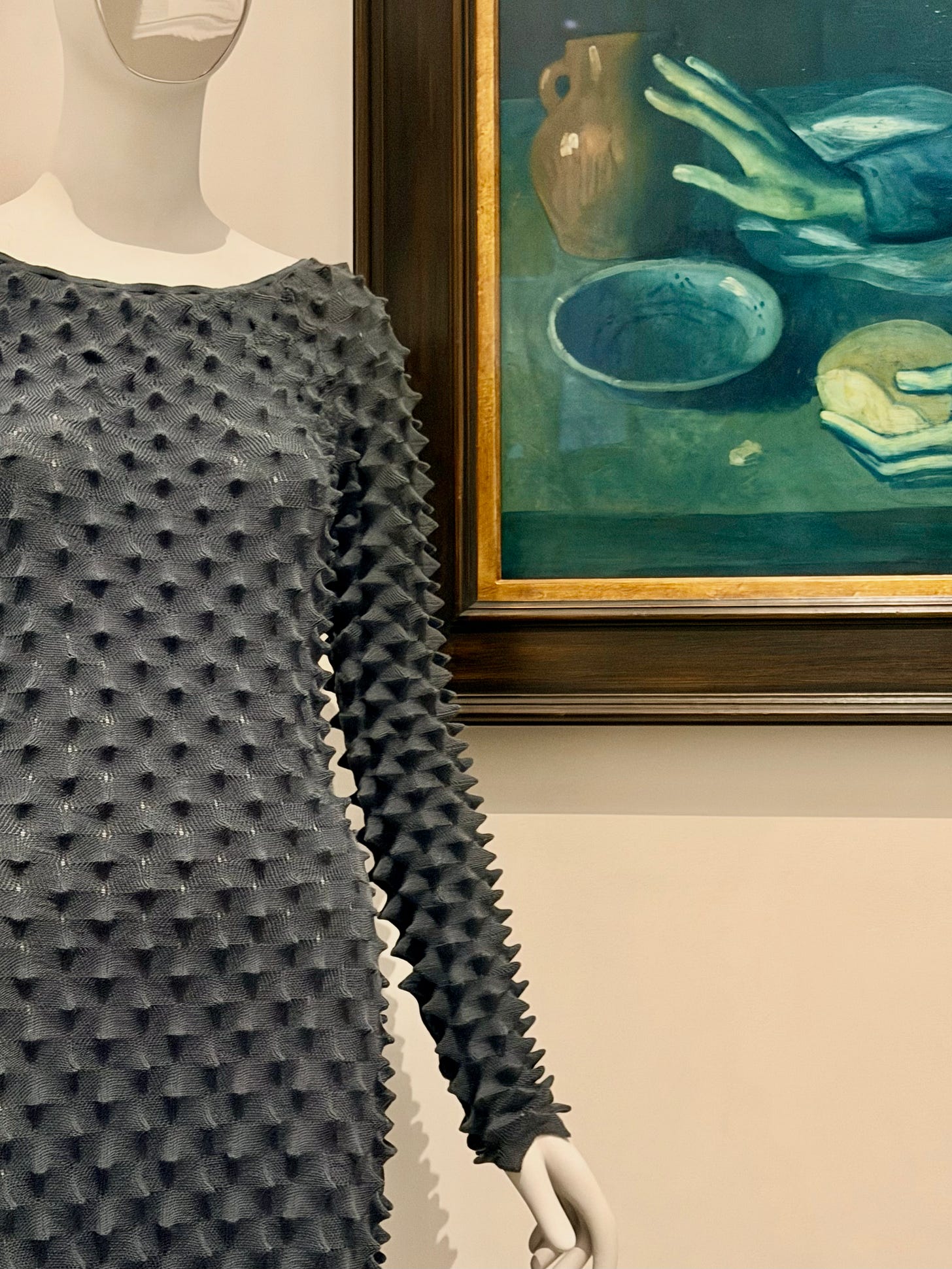
And Chet Lo’s spiky knitted gowns, in soft grey and blue-green, hang beside Picasso’s The Blind Man’s Meal (1903). In the painting, the blind man finds his bread by touch. For his spring/summer 2025 show, Lo invited guests who are blind or have low vision to feel the fabrics and listen to live descriptions of each look.
This is the pairing that stayed with me longest. Clothes are made to be worn, touched, and moved in, and a museum asks you to do none of those things. Lo’s knits look soft and sharp at the same time, and the only way to know which is the one thing you can’t do in a room where even leaning in gets you a warning.
So, is it art?
At the Met, at least, a Saint Laurent jacket gets the same wall, the same light and the same polite warning to step back as a Van Gogh. I’ll take that as a yes.
The side I didn’t get to
This piece only follows one thread. The whole show walks you through the body room by room, from the Naked & Nude Body and the Classical Body to the Pregnant, Anatomical and Aging Body, and finally the Mortal Body, with its mourning dress and skeletons.
Before you go, wherever you are
I learned most of this after the visit, by googling and bouncing my questions off AI tools until the pieces made sense. It changed what I saw in my own photos, and I wish I’d done it before.
So whatever city you’re in, if you love learning and want your money’s worth from a ticket, do a little homework first. Look up the show’s themes, the words on the walls you might not know, and the artists the designers are talking to. And check what’s free.
If you’re in London, here are two places to start. The original Nereid Monument, the one Di Petsa’s dress stands beside in plaster, is in the British Museum. Wet drapery, in real stone, and free.
The National Gallery is free too, and full of painted silk, velvet and lace. Anne Hollander curated a whole exhibition there in 2002, Fabric of Vision: Dress and Drapery in Painting, so the building has form.
-AE.
Notes:
-
Anne Hollander, Seeing Through Clothes (1978). The book that argues painting and dress shape each other. About Hollander
-
Peter Campbell on Hollander’s Fabric of Vision at the National Gallery, London Review of Books, 2002
-
Sung Bok Kim, “Is Fashion Art?”, Fashion Theory 2:1 (1998), pp. 51-71. Listed in FIT’s reading list
-
Valerie Steele on whether fashion is art, interview in Hyperallergic
-
Elaine Showalter on the Armani show at the Guggenheim, London Review of Books, 2001
-
Kant’s parerga, the frame and the drapery, overview
-
The Met on Costume Art, which runs until 10 January 2027, press release
Details about the pieces and pairings come from the exhibition’s wall labels.
First published by Third Row Thinking on 30 October 2026.
Free newsletter
The NOOR Edit
Liked this? Get NOOR’s best stories by email.