
Why Was Playboy So Iconic?
Hugh Hefner raised $8,000 — some of it from his own mother — and built the fantasy that gave Y2K its pink velour uniform. Then the pink glasses come off.
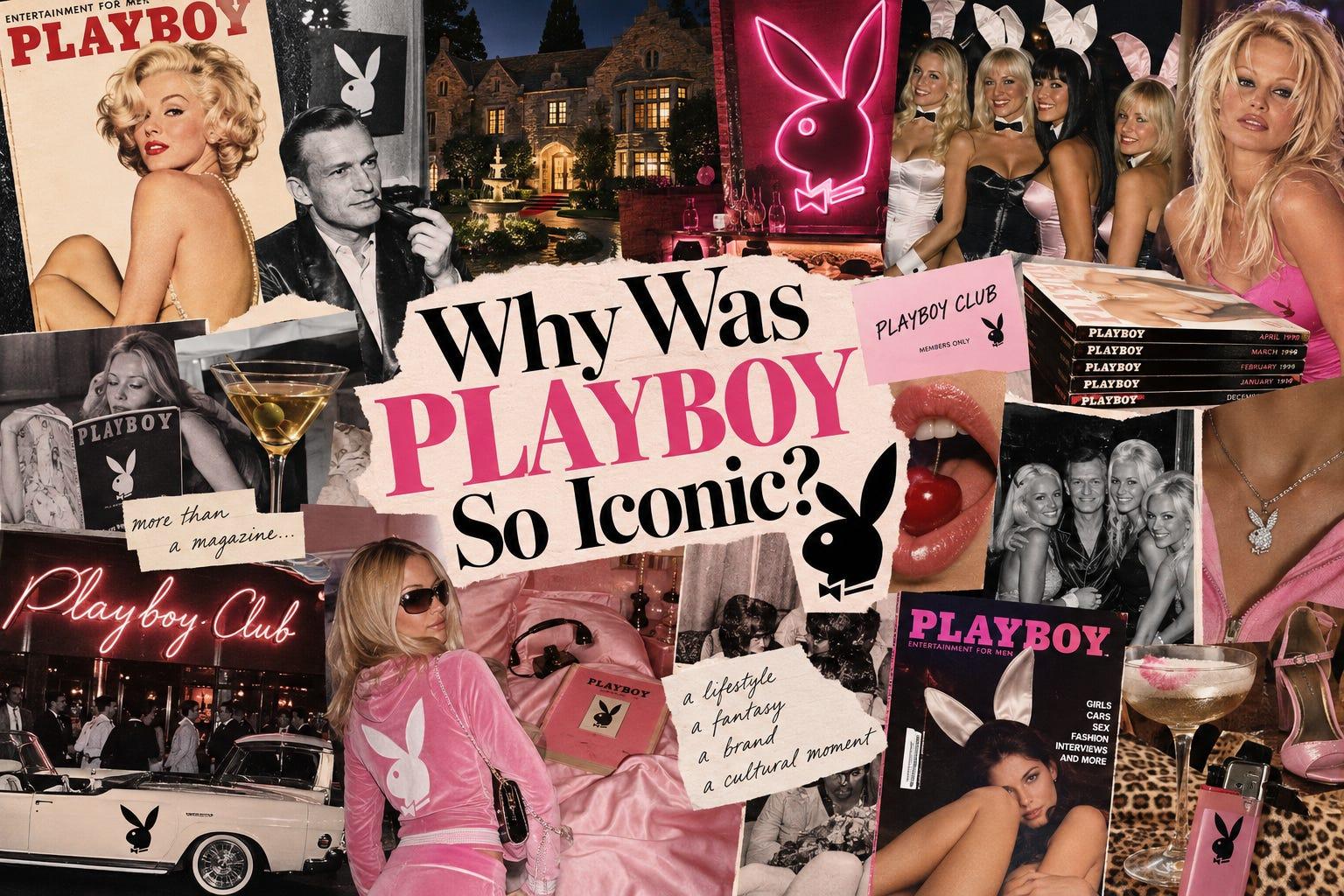
Playboy… the men’s magazine that created a revolution on pop culture and y2k fashion with its glamorous and gorgeous women and their great taste in pink Louis Vuitton bags. Playboy had essentially created the y2k barbie doll look, with playboy bunnies that had very similar styles with big fake boobs and platinum blonde hair (we will later on discuss why this was a ‘requirement’ in the bunny house). The Playboy mansion was the dream fantasy home of every barbie loving girl and the mansion parties were the fantasy of every bachelor during the 2000s. I am one of those people who has been OBSESSED with Playboy since I was young. I always thought that the women were gorgeous, their pink outfits were glamorous, they dressed exactly like the barbie dolls I had growing up, their bedrooms were covered in pink and they lived in a huge mansion with a pool in it, I mean come on… there was a pink golf cart on the estate. Not only was I fascinated with the lifestyle, I was really interested in the magazine itself. I believe that, despite Hugh Hefner being a creepy and deeply misogynistic man, there is no denying that he had a strong creative eye. The visual world built around Playboy was genuinely incredible; some of the magazine’s photography and editorial shoots remain, in my opinion, among the coolest and most aesthetically striking examples of body-focused art and visual culture. Today, I want to delve deeper into the world of Playboy, its glamorous fantasy, wrapped in shiny plastic, and the darker reality hidden underneath. Im going to be going through the history of playboy, how Playboy gains relevancy in pop culture and the dark truths surrounding the iconic brand. So if you’re interested, follow me down the rabbit hole.
Part 1: The History of Playboy and Hugh Hefner
We all know Hugh Hefner as the old rich man in an expensive robe surrounded by blonde bombshell women. But other than that, who actually was Hefner?
He was born in Chicago, majored in psychology, and completed a double minor in arts and drawing. He was originally a copywriter at Esquire magazine and quit his job when they refused to give him a $5 raise. I believe that Hefner always had a certain artistic vision and was ready to bring that to life. Therefore, he pitched his ideas to around 45 investors, including his own mother, and was able to raise $8,000 to start Playboy magazine.
Playboy magazine was initially going to be named Stag Party to promote a bon vivant lifestyle alongside nudity to men. Playboy magazine had serious interviews and articles regarding finance, sports, and arts, along with nude centerfolds. This made the magazine feel more expensive and elite.
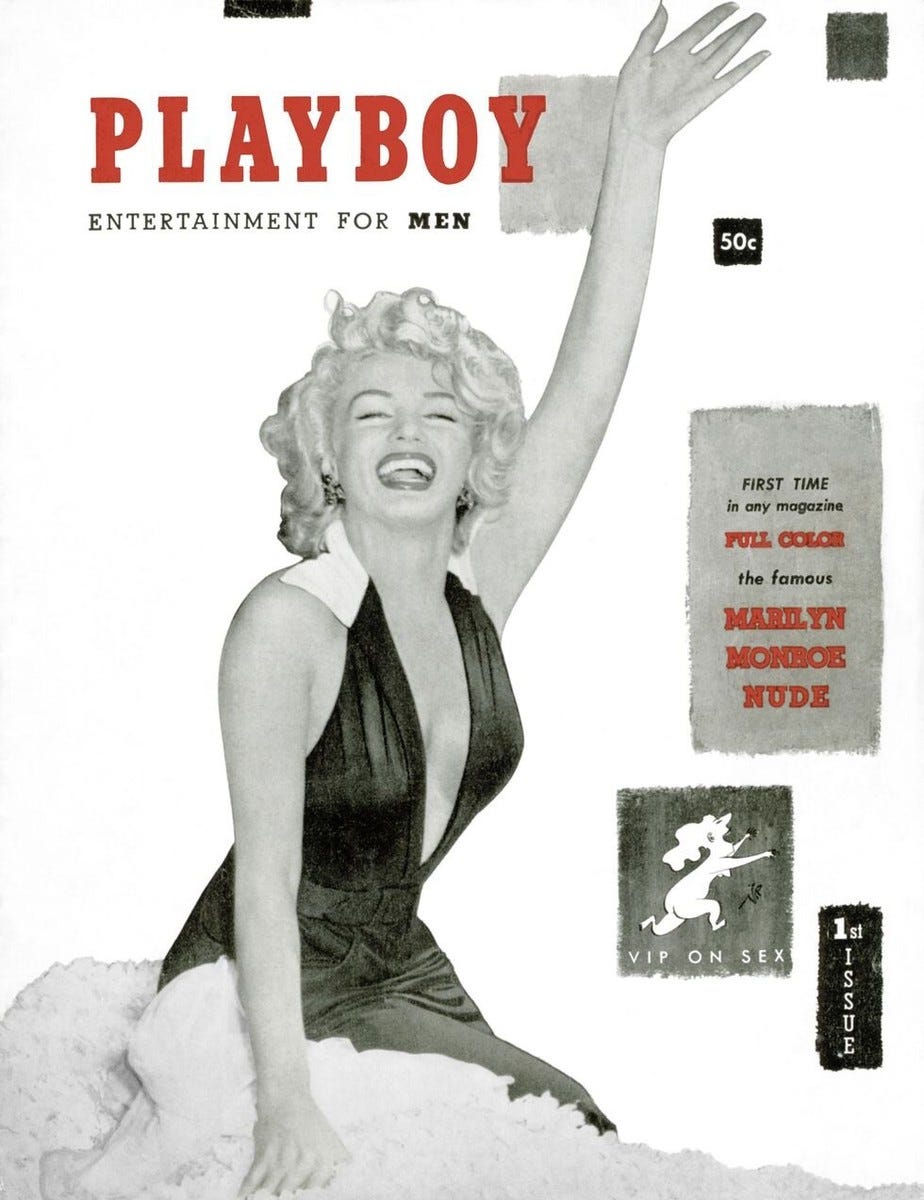
The first issue was released in 1953 and featured nude pictures of Marilyn Monroe, which she had originally done under a pseudonym. Marilyn was not paid by Playboy for the use of her pictures. As a strategic move, promoting the first cover of Playboy using Marilyn Monroe was nonetheless quite a brilliant idea, with her fame and the media attention surrounding her. He knew what people wanted, what would shock people, and what would intrigue them into actually picking up a magazine.
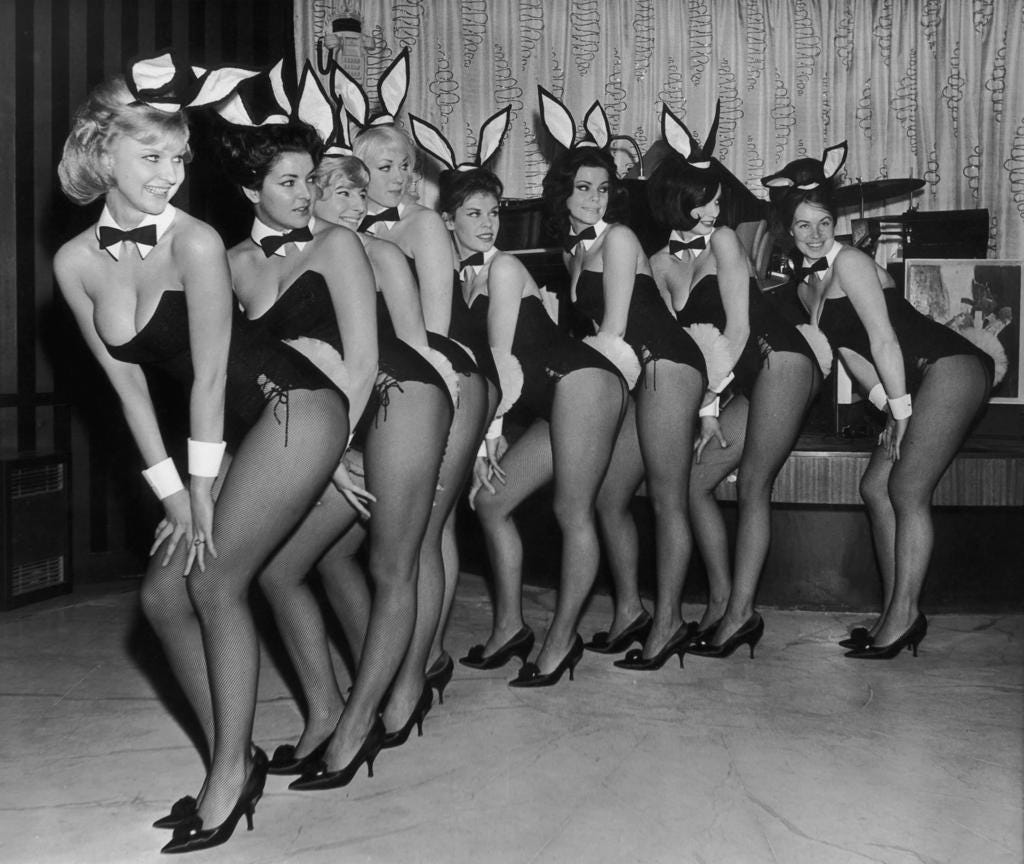
Then came the branding. The iconic bunny logo was designed by the artist Art Paul, which later came to be one of the most recognizable logos on the planet. The first Playboy Club opened in Chicago in 1960, and the Playboy bunny outfit was born. The concept was a private members’ club which was aimed at classy, wealthy, and epicurean men to dine, socialize, and come together. The club waitresses were the Playboy bunnies, dressed in satin corsets, bunny ears, cotton tails, bow ties, and cuffs. Women were sexualised, sex was present, money ran the place, and desire filled the room, and thus a concept was born.
Hefner created one of the most iconic brands of all time, to the point that not only did men dream of it, but women also dreamt of it. Being in the centerfold, becoming a Playboy bunny, a Playmate, or a cover girl seriously opened many passages to young women in the entertainment and Hollywood industry. It was a big thing to be chosen for a centerfold or a cover. Young girls all over America wanted to become the girl next door featured in Playboy. One of the main reasons that it appealed to women was that the women were not represented in a trashy or tacky way but rather glammed up to be upscale, radiant, and most importantly, untouchable… Playboy had essentially become an exclusive club for both men and women.
Part 2: How Playboy Took Over Pop Culture
As we previously talked about, the first issue of Playboy included nude pictures that were taken of Marilyn Monroe many years ago, and somehow Hefner got the rights to those pictures. Making a big splash in the publication world in that way was definitely a great PR move by Mr. Hefner.
Then the brand got huge. The magazine, clubs, merch, the bunny logo was splattered over everything. There were pink bunny pillows, Playboy clothes, pencil cases, bags, and everything that fits into a young woman’s world.
Then came the Playboy Mansion. Ah, this is my favorite part. The iconic Holmby Hills estate was purchased by Hugh in 1971. It became the dream home of every young man in America, the goal of every young girl trying to break into the industry, and the hottest spot in town that celebrities were trying to get an invite to. It was exclusive, hot, and crazy. The estate had a zoo, tennis court, pools, and a game room. The mansion hosted the most iconic 2000s parties, such as the famous Halloween and Midsummer Night’s Dream bashes.
Once the early 2000s came, Playboy really hit its peak. The mansion was the best place to party in LA, and Paris Hilton became a frequent visitor at the estate, and she basically represented that era: blonde hair, pink outfits, velour tracksuits, the tiny dog, and the party-girl glam. Finally, once the reality show The Girls Next Door on E! started up with the stars Holly Madison, Bridget Marquardt, and Kendra Wilkinson, it became a household name. Suddenly, Playboy wasn’t just for men. It was a Y2K aesthetic, worn by girls everywhere, and the rabbit head was plastered on Juicy-adjacent tracksuits, mini bags, and everything in between.
Part 3: The Dark Side of Playboy
Okay. This is where I take my pink glasses off.
As much as I love the visuals, the reality behind the curtain was a lot less glamorous. Hugh Hefner built an image of himself as a liberator of sexuality, but the women who lived in his orbit have described a very different environment, one of control.
Living in the mansion wasn’t all glitz and glamour, but it came with a price. There were many rules for the girls to abide by. They were not allowed to leave the estate on their own, and they were not allowed to have boyfriends or meet up with men outside the mansion. They had a strict curfew for when to be home, and Hef was notified of their whereabouts at all times. These are mentioned in Holly Madison’s memoir, Down the Rabbit Hole. In the earlier days of Playboy, the bunnies were given a weekly allowance of a good sum of money, I believe around a thousand dollars. This money was given to them in order to spend on hair, makeup, outfits, and things for them to keep up their appearance and buy what they wanted. However, if Hef found out that you were somehow saving up your weekly allowance to potentially be independent, it would become a big problem. Essentially, women were controlled at all times, including their finances.
The other big issue was that Hef really enjoyed creating drama in the mansion between the girls and having them compete for him. He would encourage rivalry rather than friendship in a manipulative way, which created a toxic environment in the mansion as opposed to the ‘big happy family’ that was presented throughout the years. Holly Madison also mentions how hard this was for her, as some women had more aggressive and dominant personalities compared to others like herself, who were more vulnerable and defenseless.
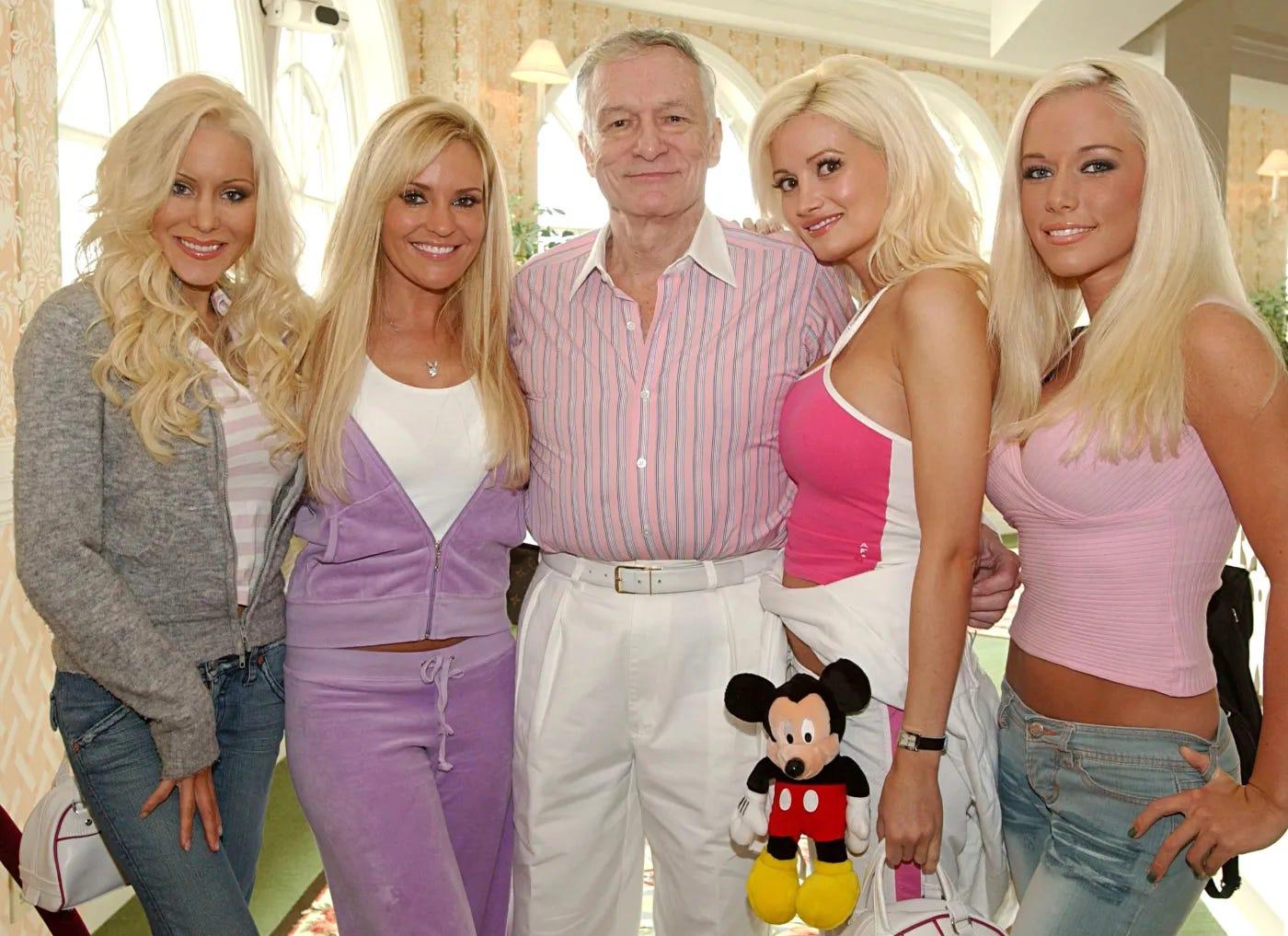
Lastly, the looks. You may wonder why all the women looked a certain way: platinum blonde, big boobs, skinny. Well, this was actually kind of like a requirement! Hef believed that the most beautiful women had blonde hair, like Marilyn Monroe. He wanted all of his girlfriends to have the exact same shade of platinum blonde. It’s the part of Y2K nostalgia I find the most fascinating and the most unsettling: an entire generation’s beauty standard was shaped by one man’s personal taste.
So where does that leave us? Hefner passed away in 2017, the mansion changed hands, and the brand has tried to reinvent itself as more of a women’s empowerment campaign. But for me, the takeaway is this: I still absolutely LOVE the aesthetic, the photography, and the Y2K nostalgia while acknowledging that the fantasy was built on something far less pretty. Hell, I still collect vintage Playboy magazines and items!
Playboy is basically a pink Louis Vuitton bag: gorgeous, iconic, and instantly recognizable, but you should always check what’s inside before you buy into it. 🎀
Thank you for coming to my pink TED Talk.
Love,
Beste
First published by That Girl Theory by Beste on 12 November 2026.
Free newsletter
The NOOR Edit
Liked this? Get NOOR’s best stories by email.