
Pretty Doesn’t Pay
Some fashion brands are admired by everyone and bought by almost no one. The Image Desk on the difference between looking good and selling, and five signs you can check from your phone.

There is a kind of fashion brand everyone admires and nobody buys from. You’ve seen them. The feed is beautiful, the campaign images are shared by people with good taste, and the website looks like a magazine. And somewhere behind it, the founder is wondering why the sales don’t match the attention.
The reason is simple, even if fixing it isn’t. Looking good and selling are two different jobs, measured by two different sets of numbers. This week is about telling them apart.
A vanity metric is a number you can move without moving the business
Followers, likes, page views and website traffic are the easiest numbers to grow and the easiest to celebrate. They are also the numbers most likely to climb while revenue sits still. That doesn’t make them useless. It makes them incomplete, because each one tells you about a single moment in the customer’s journey and nothing about the rest.
Kunle Campbell opens his book E-Commerce Growth Strategy with a story about exactly this. Early in his career, he doubled a brand’s website traffic in twelve months. He had promised the client that doubling traffic would double revenue. Revenue went up by 30 per cent. Traffic, it turned out, was one part of the business. Growth was the whole business working together.
He compares it to judging a Van Gogh through a magnifying glass fixed on one square inch of the canvas. You can see the brushstrokes perfectly, and you completely miss the painting.
Kunle Campbell opens his book E-Commerce Growth Strategy with a story about exactly this. Early in his career, he doubled a brand’s website traffic in a year. He had promised the client that doubling the visitors would double the sales. Sales went up by 30 per cent.
More people came. Not many more people bought. Traffic was one part of the business, and growth needed all the parts working together.
Read the bottom of the board
Here’s an invented example, so we aren’t guessing at a real brand’s numbers. A small jewellery label spends six months on paid ads. The founder looks at the results and is delighted:
6 months later…
Instagram followers: Up 200%
Website visits: Up 150%
People clicking the ads: Up
Share of visitors who buy: Down by a quarter
Sales to new customers: Up 15%
Sales to returning customers: Down 10%
The founder is reading the top three lines. Read the bottom three.
More people are visiting, but a smaller share of them buy. So the ads are bringing in more people, just not the right people.
And sales to new customers are up while sales to returning customers are down. That matters, because a new customer costs money to find every single time, while someone who has already bought from you comes back for free. This campaign is paying for strangers and quietly losing the regulars.
The top of the board says success. The bottom says warning.
Five things you can check from your phone
You can’t see another brand’s sales. But selling leaves traces in public, and you can read them in about twenty minutes.
Pick one brand that sells to the same customer as you and is a step or two ahead: a bit bigger, a bit better known, but not a household name. Run the five checks on it. Then run them on your own brand.
Where it scores better than you, you’ve found something to learn. Where it looks great but shows few signs of selling, you’ve found something not to copy.
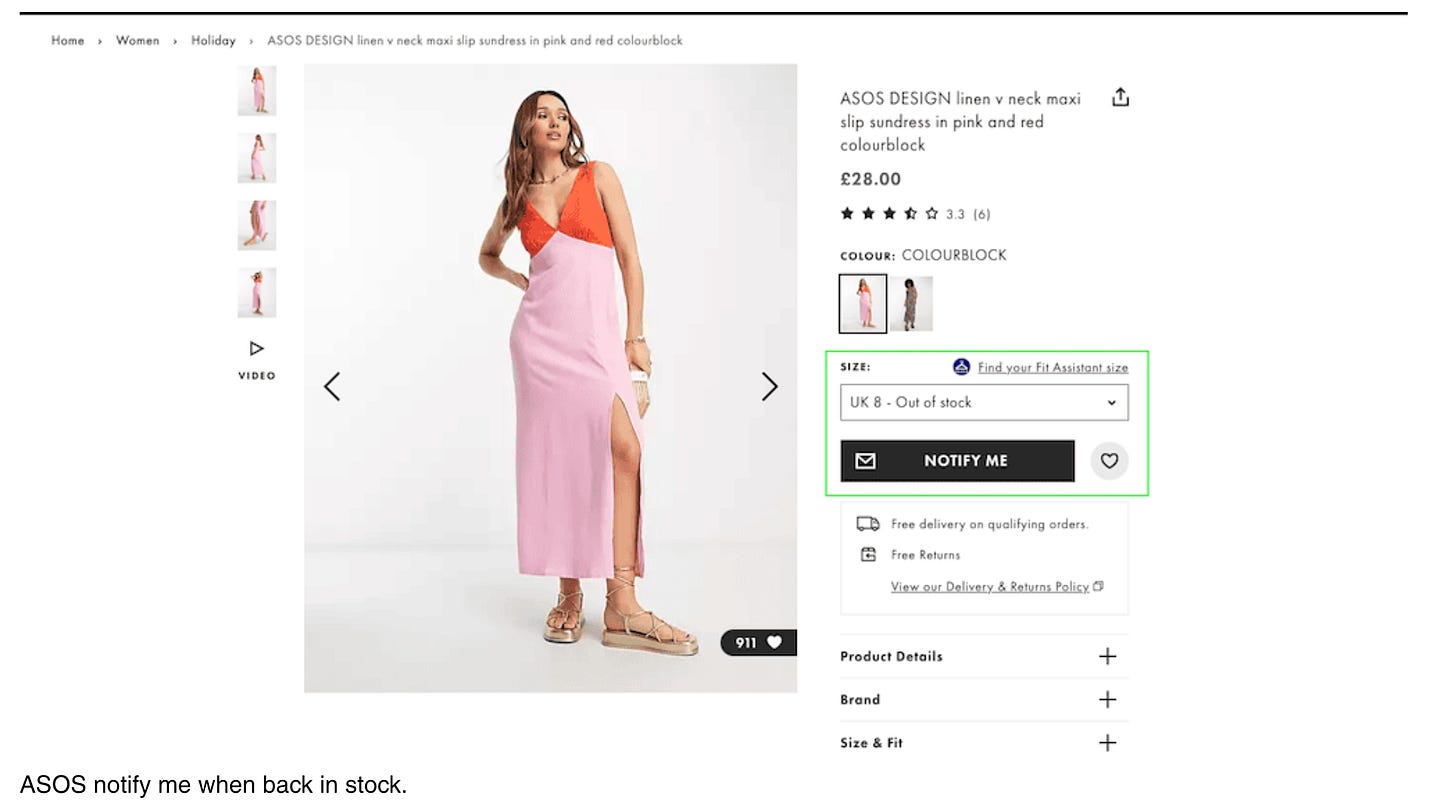
-
Sold out. Pick one category on their shop and count the items marked sold out or “notify me”. Lots means people want more than the brand can make.
-
Resale prices. Search the brand on Vinted or Depop. If second-hand pieces sell at or above the original price, people really want them.
-
Reviews. Open three product pages. How many reviews are there, and how recent is the newest one? Many and recent means steady sales.
-
Momentum. One search: new shops, new countries or collaborations in the last year. Growing costs money, so it usually means sales.
-
Consistency. Read the Instagram bio, the homepage and one product description. Do they all describe the brand the same way, for the same person? Brands that sell usually know exactly who they’re talking to.

Your task this week
Run the five checks on a brand your competitor. Then run them on your own.
If the brand you admire looks great but shows few signs of selling, you’ve learned something about what you’re copying. If your own brand does the same, you’ve found where to start.
Pretty is the entry ticket in fashion. It isn’t the business.
Sources: Kunle Campbell, E-Commerce Growth Strategy (Kogan Page, 2023), chapter 1.
First published by The Image Desk on 16 November 2026.
Free newsletter
The NOOR Edit
Liked this? Get NOOR’s best stories by email.