
Vogue World Isn't Confusing by Accident
Robots on the runway in Milan and a front row that did not look amused. Third Row Thinking, who wrote a master’s dissertation on Vogue World, explains what the event is for.
The robots were not the point.
Halfway through Vogue World Milano on 22 September, a troupe of robots walked out onto the runway. The audience laughed and lifted their phones. Alessandro Michele, sitting front row, barely moved. His “pained expression” went viral within hours, and Miuccia Prada’s face travelled just as fast.
By the next morning my feed was full of creators, among them @selloutartist, @glo.guide, @theluuhoo, @jaytibbitts, @nakullax, @eugbrandstrat and @twinbrett, asking some version of the same question. What even is Vogue World? One creator offered a million dollars, and a robot, to anyone who could explain it.
I can’t claim the prize, but I can try. I spent my master’s dissertation studying Vogue World, and the confusion everyone is describing isn’t a side effect. It’s the clearest sign of what the event is for, and of where it’s starting to crack.
What it actually is
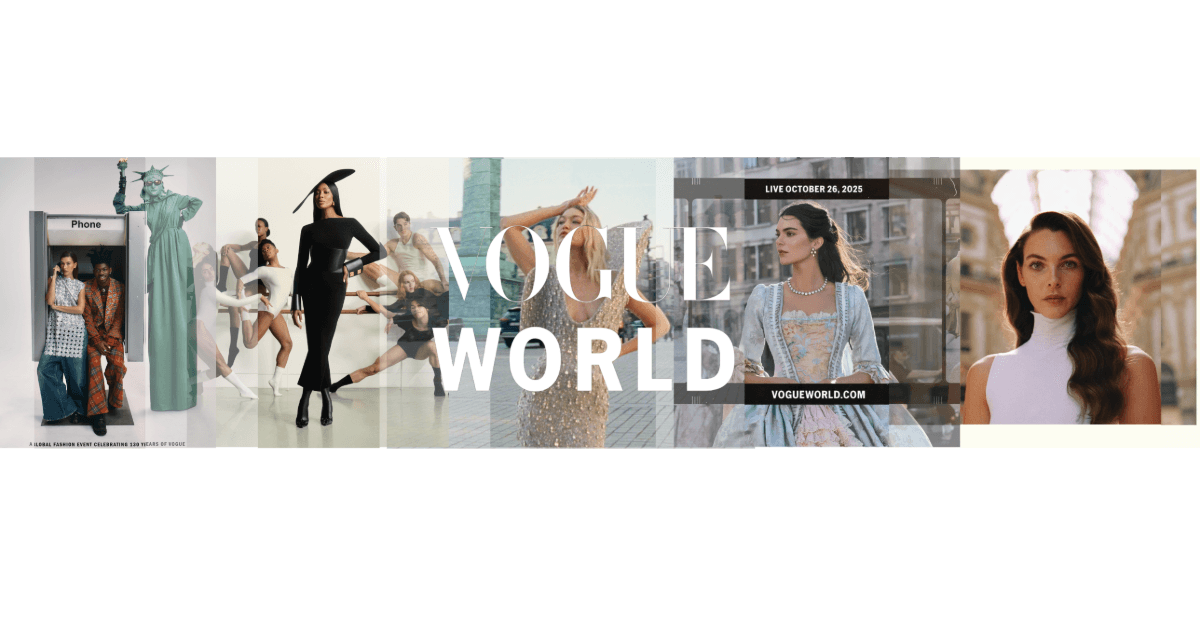
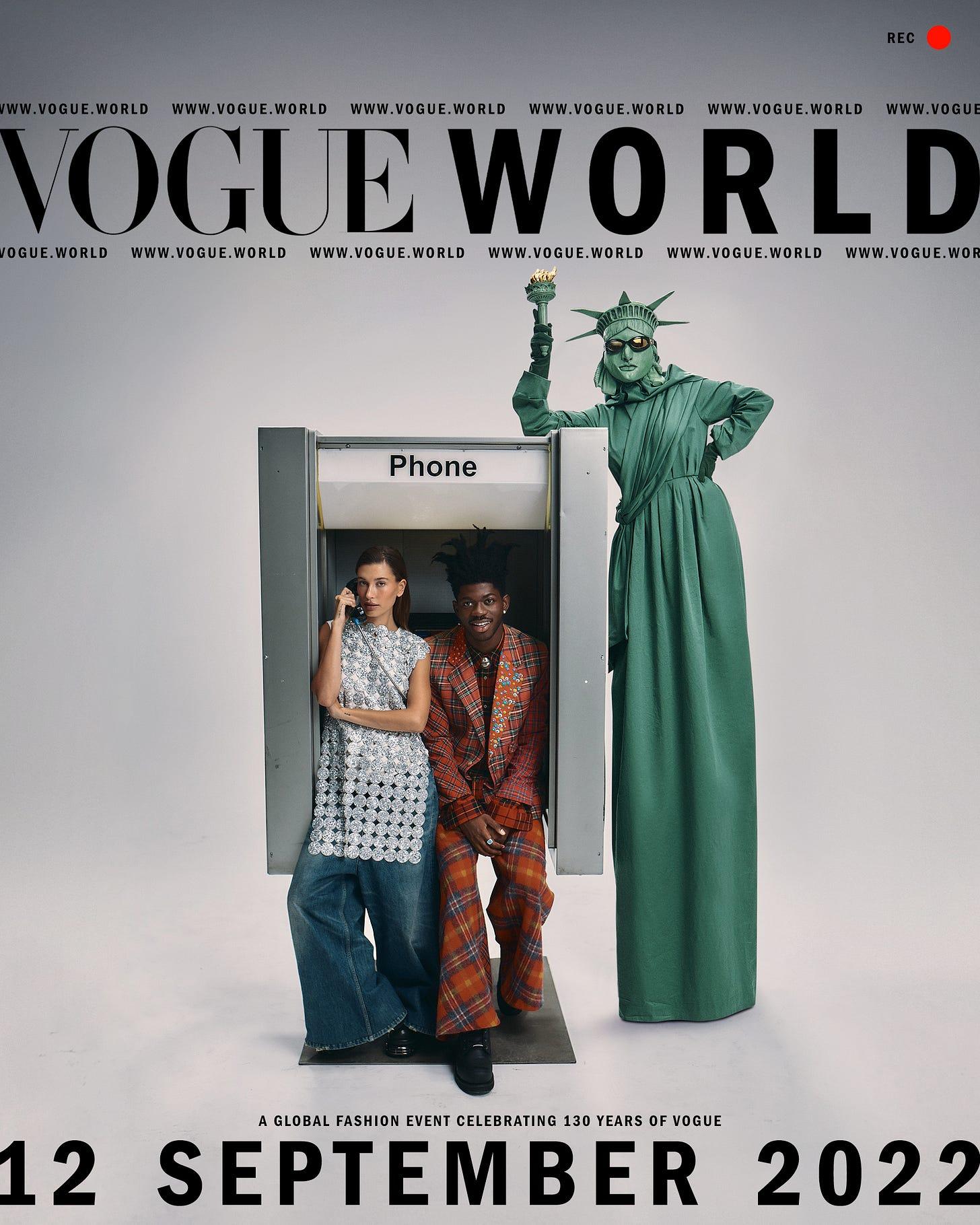
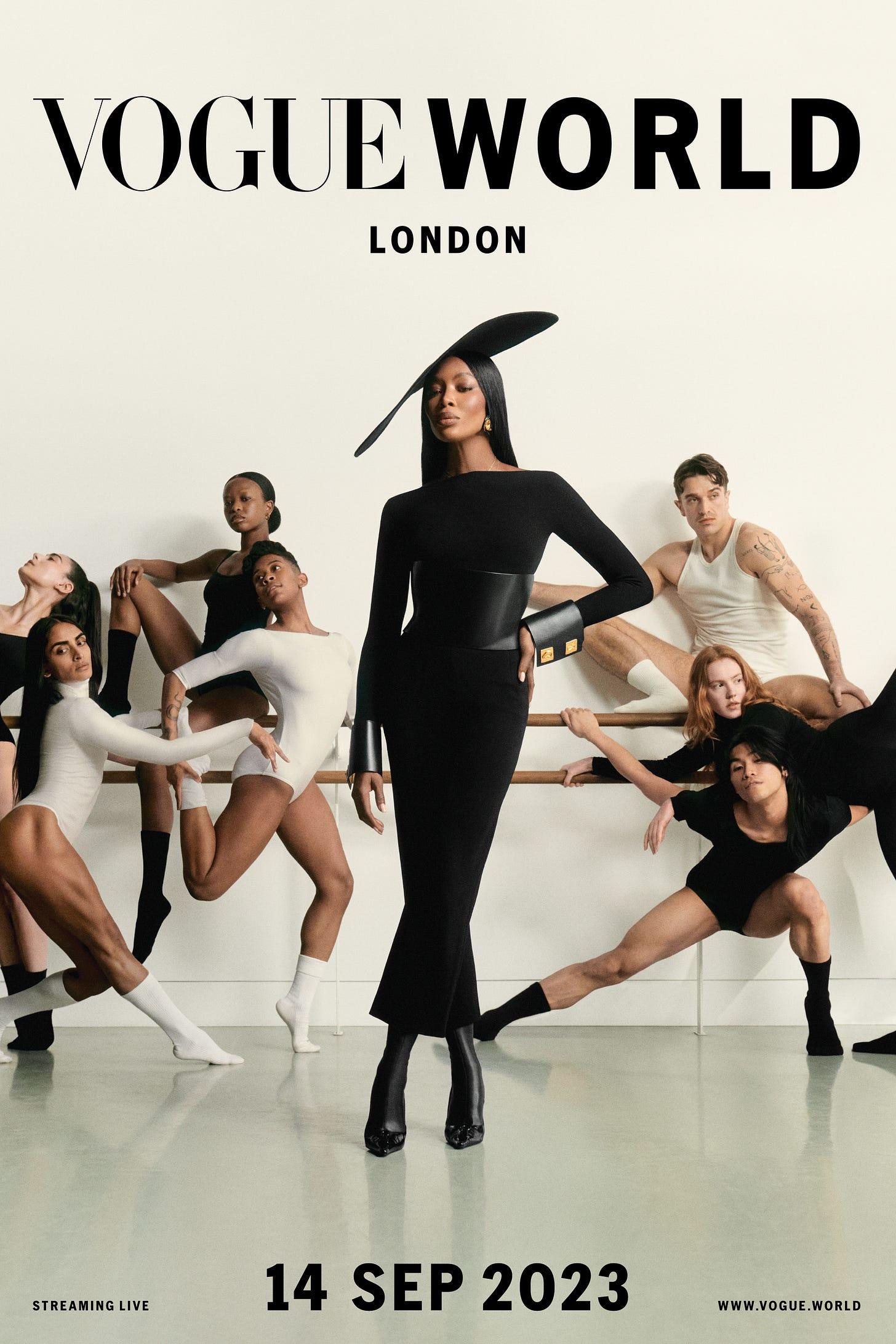
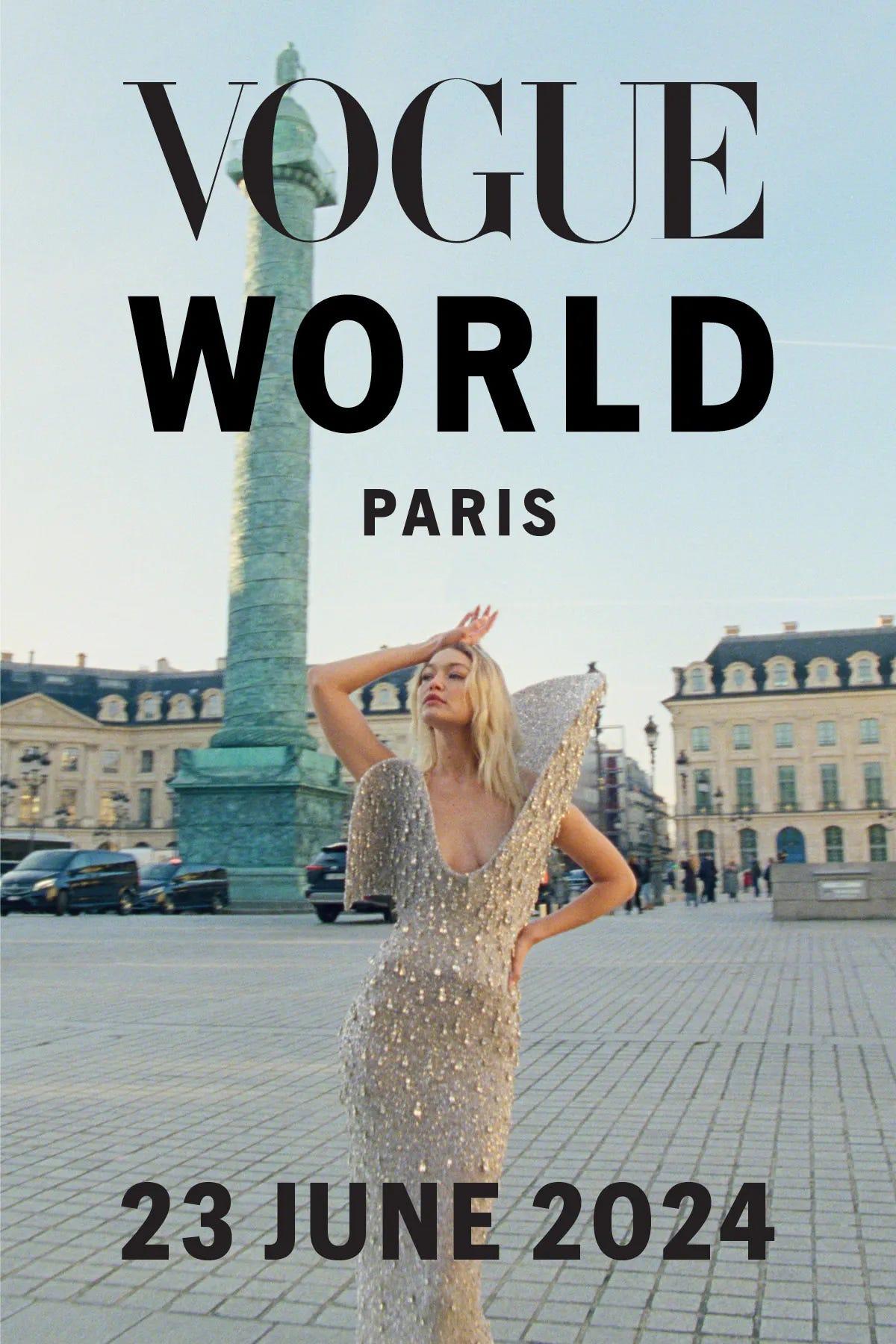
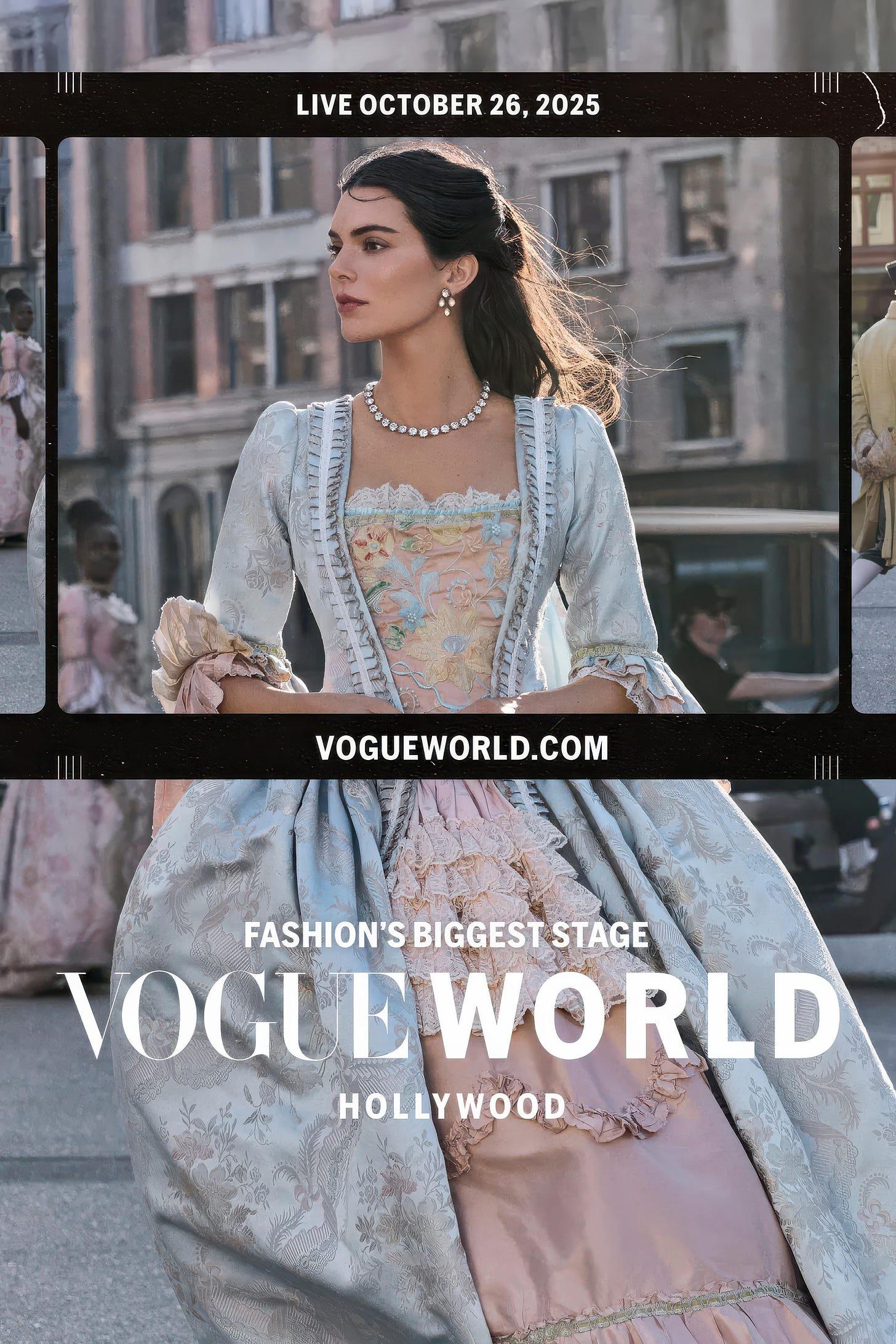
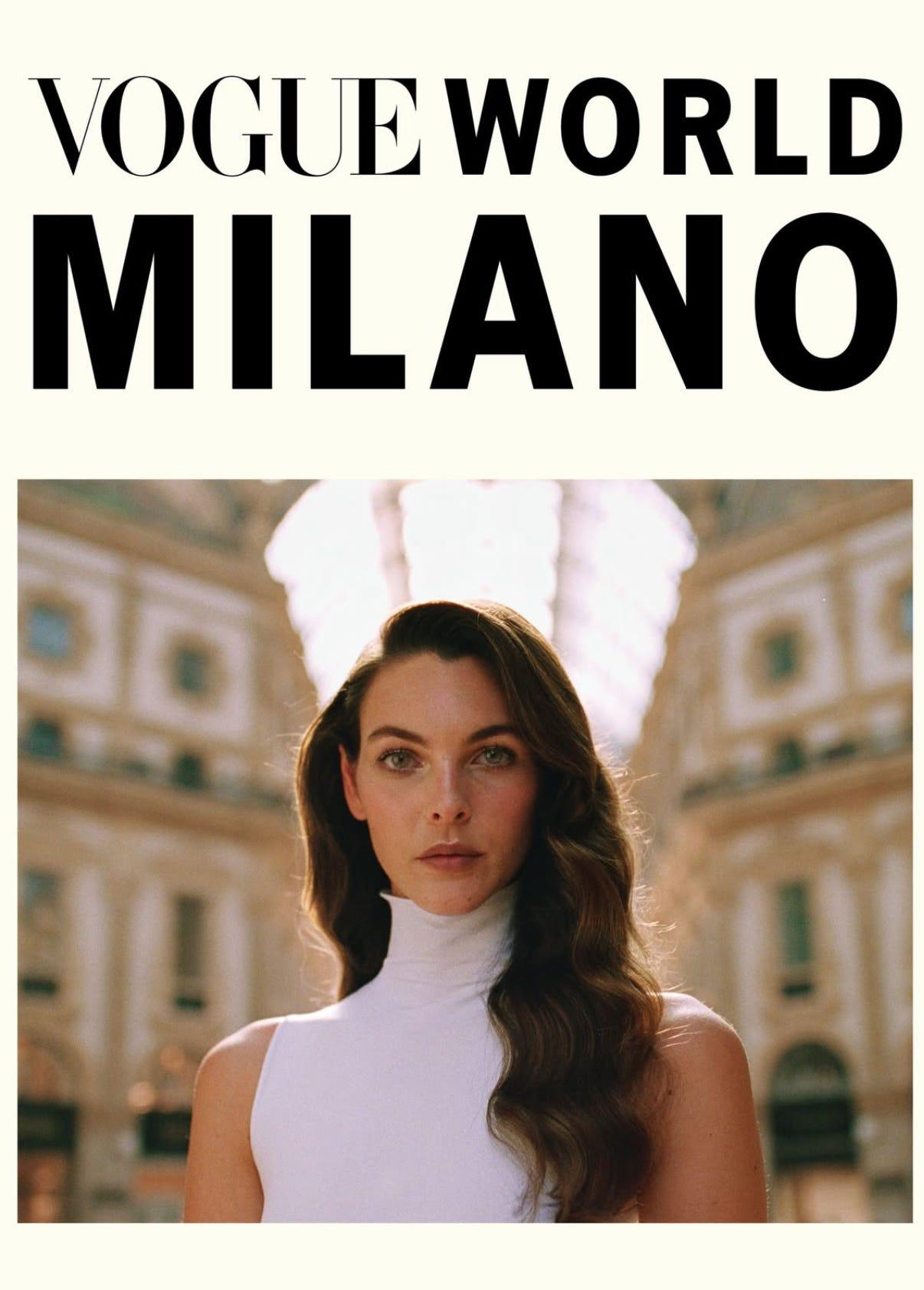
Start with the money, because that’s the easy part. Vogue World launched in New York in 2022 and has since moved to London (2023), Paris (2024) and Hollywood (2025). This year it took over Milan’s Galleria Vittorio Emanuele II. Each edition mixes a runway, a concert, celebrity cameos and a charity cause, and it’s all livestreamed.
Print advertising has been shrinking for years. British Vogue’s circulation fell by more than 30% between 2006 and 2013 alone. A magazine can no longer live on the pages people buy. What it still owns is a name and a guest list, and those can be sold as events. The Met Gala, the Vanity Fair Oscar Party and Vogue World are now among Condé Nast’s most important revenue streams. One of the experts I interviewed called them Vogue’s “biggest source of revenue.”
The sponsors explain the rest. This year’s presenting sponsors were Alo, eBay, Eli Lilly and Meta’s smart glasses, with extra support from FedEx and OpenAI. None of them sells couture. What they buy is proximity: a few hours inside fashion’s world and some of the cultural prestige that fashion still has and that they lack.
So yes, it’s marketing. But calling it a stunt explains nothing. The interesting question is why it still works, and that’s where my research comes in.
What I found in London
My dissertation looked at Vogue World London in 2023, staged at the Theatre Royal Drury Lane and directed by Stephen Daldry. I analysed its imagery and interviewed five people who work in fashion journalism, PR and cultural strategy. Three findings matter for Milan.
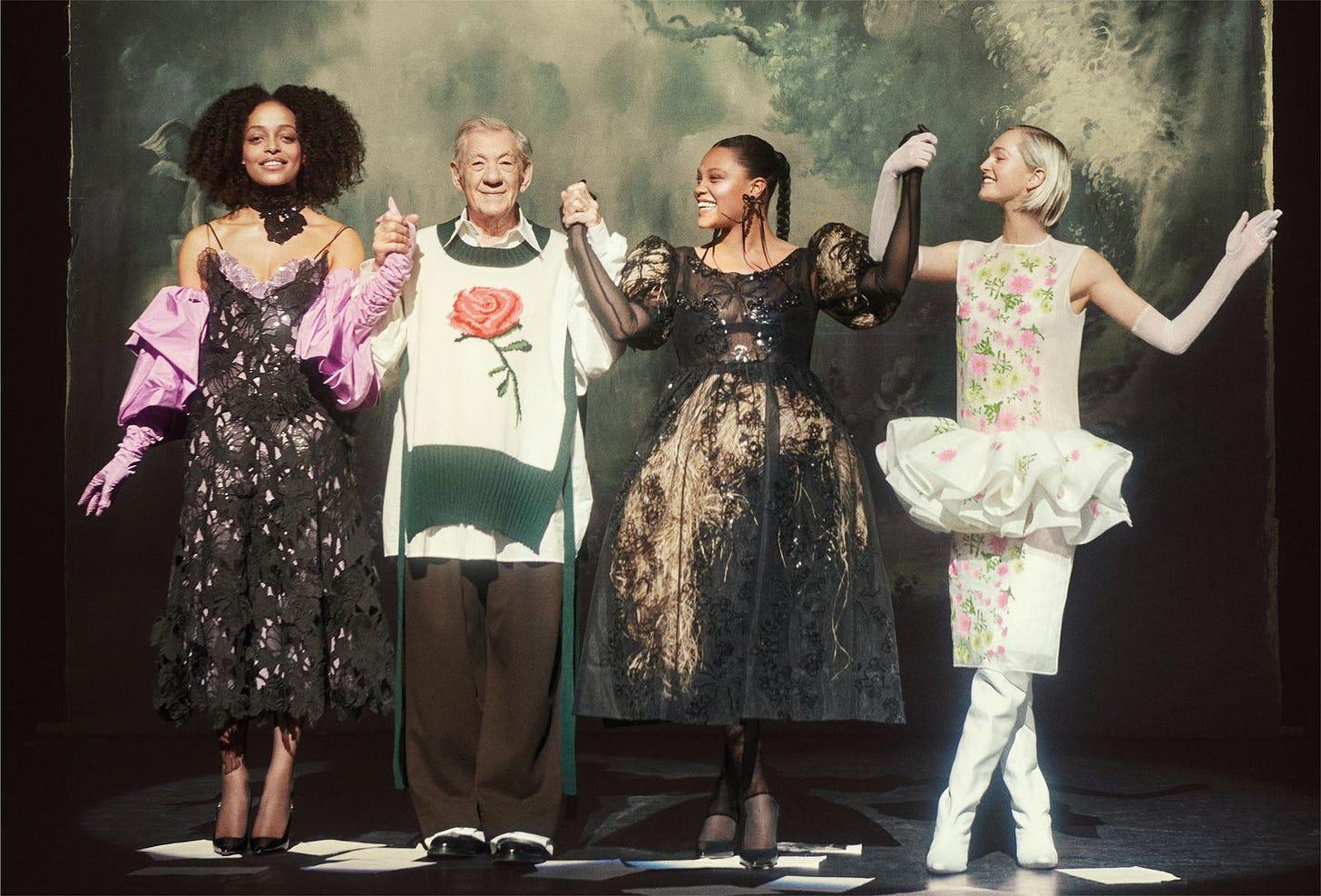
First, Vogue’s authority hasn’t vanished. It has shrunk. There was a time when Vogue decided what fashion meant. Now, my interviewees said, it still matters enormously inside the industry, but much less outside it. One cultural strategist I interviewed called it “a fashion echo chamber.” A placement in Vogue still impresses buyers and investors. It no longer sets the mainstream. The events exist partly to fill that gap: if you can’t command attention through the page, you stage something people can’t ignore.
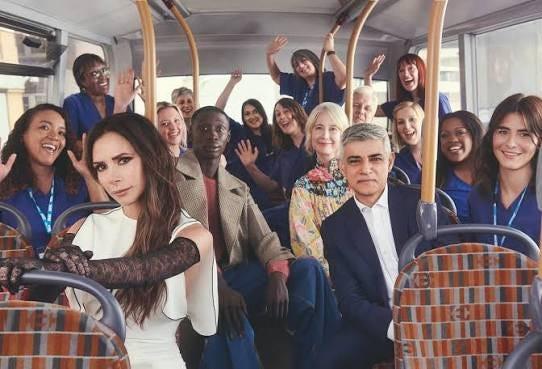
Second, the inclusivity is real on screen and much thinner in the room. The defining image of London 2023 was a red double-decker bus carrying Victoria Beckham, Mayor Sadiq Khan, TikTok star Khaby Lame and members of the NHS Choir. It said: this belongs to everyone. Tickets to the actual show cost between £150 and £2,500, in a theatre of about 2,000 seats. Anyone could watch the livestream. Very few could be in the room. As one interviewee put it, “you’re literally paying to be in that world.”
Third, and most important, spectacle has a breaking point. Vogue World works by stacking things up: celebrities, heritage, music, charity, sponsors. Each layer adds attention. But I found that when the layers stop adding up to a story, the effect flips. Instead of prestige, people see noise. I called this the coherence threshold. A fashion journalist I interviewed described London as “random” and “lacking a clear message.” In 2023, that was an insider’s complaint. In 2026, it’s what everyone is saying out loud.
What Milan tells us
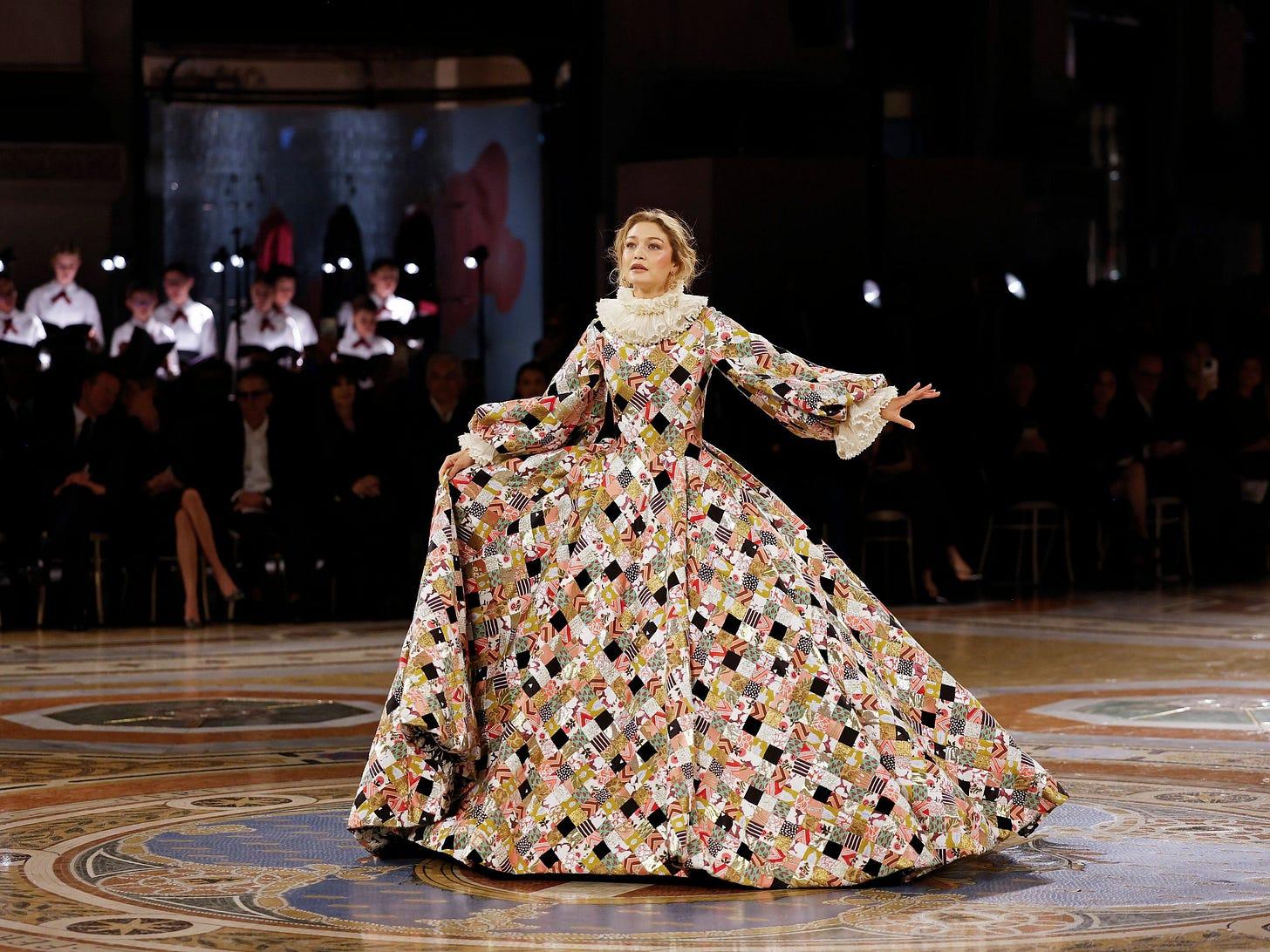
The Milan edition was Vogue World’s first in Italy. Its theme was that the future is made by the hand. Much of the show lived up to it. Gigi Hadid opened in a Valentino couture gown by Alessandro Michele, pieced together from recycled Venetian quilts over about 1,680 hours of handwork.
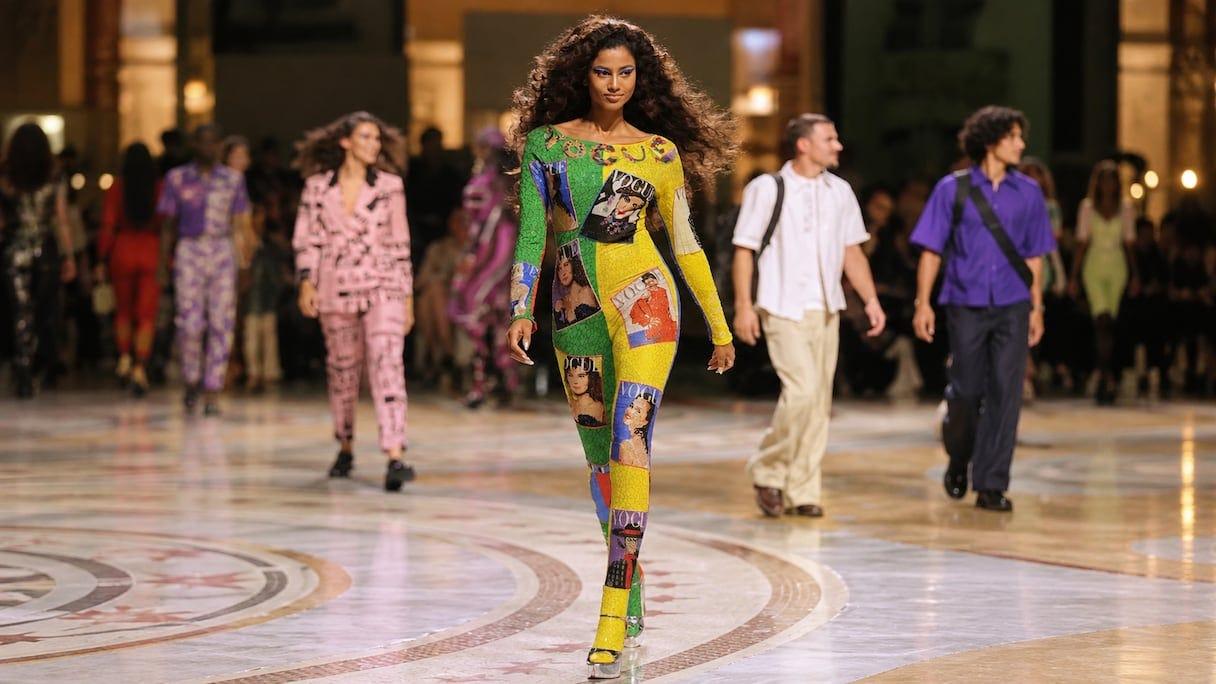
Imaan Hammam wore a Versace catsuit inspired by Gianni Versace’s Spring/Summer 1991 collection. Houses dipped into their archives and put real craft back on display.
Then came the robots. A celebration of human craftsmanship, backed in part by OpenAI, sent humanoid robots down the runway. You don’t need a dissertation to see that the message and the medium were pulling in opposite directions. That is the coherence threshold, staged in a single moment.
What has really changed since London is who is paying. In 2023 the sponsors were Coach, eBay and the car brand Genesis: retail and luxury names that sit close to fashion. In 2026 eBay is still there, but now beside an AI lab, a social media giant and a pharmaceutical company. Through the lens I used in my research, the sociologist Pierre Bourdieu’s idea of turning money into prestige, this is a big shift. Fashion used to sell its prestige to its own industry. Now it is selling it to tech, which has huge economic power and is short of cultural credibility.
Several of the creators I watched made the same point: tech is trying to turn its money into cultural credibility. I agree. But the deal has a cost for Vogue too. Every sponsor that doesn’t fit the story makes the story harder to tell.
Eli Lilly is the sharpest example. The company makes Mounjaro and Zepbound, two of the best-known GLP-1 weight-loss drugs. It was a presenting sponsor of a show that also put plus-size models on the runway, and health campaigners raised concerns. Lilly's own film at the event never mentioned its drugs, but for many viewers, the logo raised the question anyway.
So when people say they can’t explain Vogue World, they aren’t missing something. They are reading it correctly. The event is now built to carry so many messages, for so many paying partners, that it has stopped carrying one of its own.
So what should Vogue do?
It would be easy to end on “fashion is dead.” I don’t think that’s true, and the best parts of Milan prove it. When the clothes were on stage, the craft, the archive and the history were exactly what Vogue is uniquely able to show. No influencer can borrow Gianni Versace’s 1991 collection for a night.
The problem is that Vogue World keeps adding layers without asking what the evening means. My interviewees agreed that Vogue still matters, but its authority now depends on whether people trust its judgement. Spectacle buys attention. Only coherence turns attention into trust.
A fashion archivist and lecturer I interviewed offered one way forward: Vogue World could do more to connect the spectacle to that wider ecosystem. You could imagine a creative agency or hub, a stronger link to existing education programmes, or a real commitment to the craftspeople the Milan theme celebrated. Any of these would give the events something to point back to.
Next year Vogue World goes to San Francisco, the home of the tech industry that is now helping to pay for it. Announcing it, Anna Wintour praised the city’s “history of rebelliousness” and its “incredible innovation.” That will be the real test. Either Vogue shows tech what culture looks like, or Vogue World becomes what its critics already suspect: a beautiful stage, rented out to whoever can afford it.
-AE.
Notes:
Interview quotes and London 2023 figures come from my own dissertation. Everything else is linked below.
-
Sponsors, date and venue: Vogue Scandinavia, How to watch Vogue World 2026: Milano
-
Robots, Unitree, OpenAI’s role and designers’ reactions: TechCrunch, Vogue sent robots down the runway at Vogue World, and people were not impressed (23 September 2026)
-
Eli Lilly sponsorship, plus-size models and Lilly’s film: The Guardian, Chloe Mac Donnell (27 September 2026); ABC News Australia (30 September 2026)
-
Unitree on the Pentagon 1260H list (8 June 2026): WilmerHale client alert; The Next Web
-
Vogue World 2027 in San Francisco and Anna Wintour’s quote (announced 6 August 2026): NBC Bay Area
-
Host cities 2022–2025: TODAY, Vogue World: Hollywood will celebrate the connection between film and fashion
-
Gigi Hadid’s Valentino gown: ARY News
-
Versace archive looks: Vogue Scandinavia, All the top models who walked Vogue World 2026: Milano
-
London 2023 figures and interview quotes: the author’s MA dissertation, King’s College London (2025)
First published by Third Row Thinking on 2 October 2026.
Free newsletter
The NOOR Edit
Liked this? Get NOOR’s best stories by email.