
How to Become the Most Informed Person at the Table
At fifteen, Judy Yamakawa walked out of school and took a train to London for a lecture on black holes. She has been chasing the feeling of knowing the least in the room ever since.
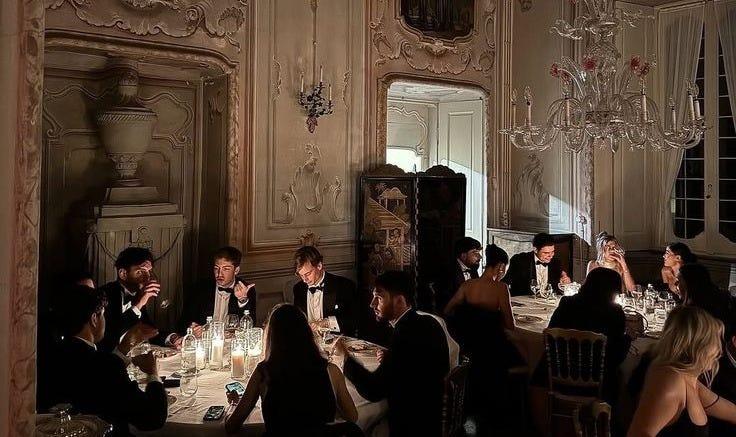
At fifteen years of age, I walked out of school without permission (the horror), used my parents’ emergency card and took a train to London, to sit in a lecture on black holes.
It had been one of those days when everything goes wrong. I felt trapped, pulverised and stamped on.
At that age, my only real ambition was to go to university. I heavily idolised Leonardo da Vinci, the world’s poster boy for studying everything he could get his charcoal covered hands on. I did particularly mind what exactly I read at university. If explicitly given the choice, I would have taken an ‘everything’ degree that would have consisted of a seat in every class, in every subject, every day. Paradise. I was desperately jealous of Hermione Granger and her Time-Turner, which allowed her to sit through lesson after lesson.
So, that afternoon, I left.
The school gate was usually closed during the day; somehow, I got through it. My heart was painfully loud. I walked to the local station at more of a run than a stroll. I had been to London many times, but always with family or another adult to guide me. Leaving a building and boarding a train is the simplest act in the world, and yet that day, I was convinced I would be shot or run over for doing so.
The card in my bag was for emergencies only. Occasionally I bought a sweet at lunch on it with little fanfare. It was used once in a blue moon (truly). I viscerally remember hoping my parents would not notice (or at least would be happy that I was skipping school to go to another school instead of doing drugs).
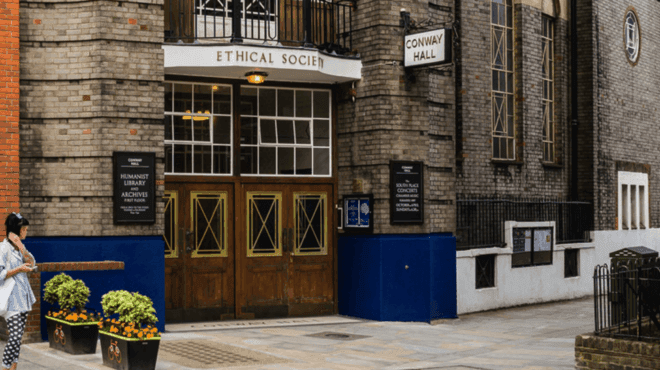
I arrived at Waterloo. Anyone who knows dear London will know it has countless places where you can walk in and hear a lecture for free. That evening after a successful google and lesson on Tube travel, I found myself in front of the esteemed Gresham College at Conway Hall.
To my immeasurable luck of the evening, Gresham hosts ticketed events that allow last minute guests at the door if the staff count any empty seats.
The auditorium of Conway Hall is a merging of a theatre with circle seats gracing their ceiling and a hall one might catch their local Christmas concert being performed at the church choir. Now, I was not the only young person in the room, but I was almost certainly the most idiotic. I was also quite well aware that my parents were under the impression I was staying late for a school sports club, and that they would be furious (truly, truly) to learn I had instead travelled into the city.
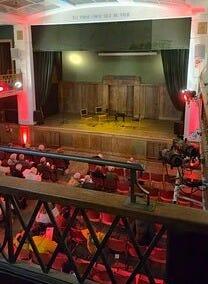
Now, none of that puckishness mattered once I was sat. I was watching a real life scientist on stage, surrounded by physics enthusiasts who had read roughly 12,000 more textbooks than I had.
I cannot begin to describe how was lovely to feel that I belonged; but that was not what hooked me. What hooked me was knowing that everyone around me knew so much more than I did, and that I was about to find out some of it. It felt like watching a television series when you have no idea what will happen next. The story was being told, and I was learning it.
The above was the addictive part. I have chased that feeling ever since, in everything I do.
I describe it as 50% adrenaline and 50% appetite. When you know that you know nothing but that the people around you know a great deal. The moment just before you learn something is transfixing. In my experience, most people spend their entire careers trying to avoid that moment. Why? It can be a humbling feeling to chase. Disruptive to the comfortable zone one can live in where everything is steady and not surprise.
I have spent mine seeking it out.
It also explains why I hold four degrees in subjects that rarely share a room.
Opera: every note is a lesson
My first discipline was classical singing, and it is an industry I still work in regularly, predominantly in opera.
In opera, you walk into every production and every job aware that some people believe they are better than you. Some are auditioning precisely to prove it.
You can resent that. You might even be inclined to. However, it is more fruitful to listen. If you sit and dissect why a vocalist has reached the point in their career that they have, every note they sing becomes a valuable lesson.
Financing Biology and Quid Pro Quo
I went on to study biology with applied statistics as an undergraduate, leaning towards the mathematical side. After an investment research internship with a Tokyo-based investment group, upon where I learnt that reviewing ESG investments has far more fun when you can actually critically audit the science behind a company’s moat, I went straight into a master’s in corporate finance.
I was one of the only people on that course who had not studied finance or economics as an undergraduate. I was still learning at my internship, on a very generous flexible horus scheme. I heard the term DCF about 300 times in the first induction week. So, I spent my first term catching up on an entire undergraduate degree’s worth of fundamentals.
Ironically, I was also the only person on the course who could program in R. R is a legacy language treated like marmite, but, coincidentally, it is a fundamental programming language for both statistical biologists and finance professionals. The majority of my classmates were very adverse to coding (to be sympathetic to them, people tend to develop a marmite, love/hate relationship with R. Python or HTML are far more friendly for first time programmers). My classmates needed what I knew, and I needed what they knew; therefore, we negotiated ways of learning from one another that benefited us all.
That taught me something I have relied on ever since: being the least informed person in the room does not mean you have nothing to offer. It means you have something to trade.
Machine Learning and The Full Circle
My fourth degree came down to a coin flip between an MBA and machine learning. My whole career has involved translating technical theory for collaborators without a technical background; therefore, machine learning was the more pertinent choice.
The wonderful thing about programming is that, as soon as you feel you have learned something, you walk in the next day to find ten other ways someone elsewhere in the world has done the same thing. Technology moves at a pace no other industry can match, which is probably why I do not think I will ever truly leave it. It is the one field that guarantees I will always be learning.
The First Time I Pitched
The first time I pitched anything was at Tata Group’s annual Sustainathon, a national hackathon I had found through a tiny blurb. It is hosted at the TCS head office at 22 Bishopsgate, which houses a conference centre and innovation hub that seems to be an homage to an eco-friendly art gallery. One of the sponsoring companies was Aegon. I was very interested in how Aegon structured their portfolio. Coincidentally, I had been stalking a few ESG fund managers on Linkedin for a personal project using stochastic neural networks to track ESG funds and monitor their performance.
I wanted to meet these people and learn what they really did. So I applied.
I reached the final. You would have seen my body gently trembling with anticipation. While everyone else pitched, I sat saying my prayers. I went last and pitched an agentic SaaS platform, in the earlier days of popular AI and before non NLP specialists had the word ‘agentic’ in their vernacular, that graded, indexed and predicted ESG scores for funds and individual stocks, managing the overall portfolio and flagging sources of greenwashing. The value pitched was to portfolio managers that had told me how much of a hassle this was in their research and management phases when actioned manually. Ulimately, it was to make better investment decisions to benefit the managers and investors of their fund.
I won.
The prize (other than national recognition) was an internship at Tata Group, under a director who specialised in mergers and acquisitions and digital transformation. It fundamentally changed how I viewed relationships and the art of negotiation, and it exposed me to the idiosyncrasies of deal-making.
I had entered to learn from the people in that room, and with this opportunity, that is exactly what I did.
The Least Informed Seat
Since Tata, I have treated conferences, workshops and hackathons as an ecosystem. They are the shoals where you learn; where you meet connections for life and build proactively. Most of the people I value on LinkedIn are people I met at hackathons, at conferences, or at the events I now host and curate in London.
Over time, that has become a method. I call it the Least Informed Seat, and it has five parts.
-
Find the room. Seek out the lectures, hackathons and conferences where you will be the least informed person present.
-
Bring an asset to trade. You will always know something the room does not; as I learned with R, that is your currency. Do so with humility.
-
Listen to learn. Study the people ahead of you, as I studied other vocalists, and work out exactly how they got there.
-
Put yourself on the line. Pitch, perform or ask the question. Feeling fear or rejection is part of the price you have to accept as a possibility to gain something.
-
Pay attention to the curious people. Look for the curious thinkers and collaborators who want to understand the world beyond their own field, and keep them in your network.
Try this at your next event
Here is one tactic you can use straight away. At any conference with clashing talks, you will miss sessions you wanted to see. Treat that as an opening line rather than a loss.
When people leave a talk you missed or are wandering around, go over, tell them you were curious about it, and ask how it was. People enjoy being asked for their view, and you will learn something either way. It’s a natural opener that doesn’t feel repetitive or cornering. Now, the most important is getting into the right rooms to build your network. Here is how:
Finding the room
My first port of call is LinkedIn; my second is Eventbrite. On both, I search by keyword and use Boolean searches to narrow the results. For example, a search such as (”AI policy” OR “AI governance”) AND London AND (talk OR panel OR conference) will surface far more than a single keyword ever could.
There are also a great many excellent Substacks (see my recommendations here) and mailing lists devoted to events, and more creators, myself included, now announce the in-person conferences, lectures and events they are involved in on their own channels. Subscribe to the ones in your field and in the fields next to it.
Then I do something I usually hate: once I attend an event, I deliberately sign up to its marketing. Organisers regularly invite past attendees back, often for free or at a discount, and those emails are how you hear about them first.
Most recently, Instagram has connected me to event organisers in my fields of interest. Yes, the gen z photo app that usually trends for the Victoria Secrets show. I find them both through advertising targeted directly to me (at least the data collection is giving back…) or through the organisers sharing updates on their stories. I’ve reached out to attend, collaborate and be the first to know about future events. Let me know if you want to know how I approached these entities.
Getting in for less
If I see an event I like and the price is a barrier, I message the organiser. I have done this since I was an undergraduate. I would ask whether I could attend for free, whether there was a student rate, or whether a group of us could attend in exchange for advertising the talk on campus.
That last offer is the second part of the method in action: you are bringing something to trade. The organiser wants an audience; you can bring one.

Before you walk in
I always find out who is speaking and look into their background. I sort the speakers into two categories.
The first category is the people I actively want to speak to, because there is a clear reason to connect: a project to pitch, an event to invite them to, a possible collaboration, or, when I was looking for internships, an opportunity to ask about.
The second category is the people I want nothing from, but whose subject I want to understand. I may never work in their niche; I still want to know what they know.
The first category takes priority, but for both I read their LinkedIn profiles, personal pages and company pages, understand their background, and note when they are speaking.
At larger events, such as a tech week or a conference, talks often clash; therefore, I plan which ones I will attend. If I am going with a friend or a colleague, we compare plans and split up, so that one of us can report back on the talk the other missed.
Questions worth asking
I never ask a question I could answer by searching online, or by reading the event listing or the speaker’s own page.
Instead, before I go in, I will write down a few questions about what I do not understand and hope to learn from the talk. Sometimes the talk answers them; sometimes the speaker goes off on a tangent, or the talk turns out to be on a different topic from the one I expected.
I understand that a lot of my audience, being largely tech and tech adjacent, may abhor the idea of carry a good old pen and notebook. I understand the concerns. You hate handwriting, its another thing to carry, your phone can record notes for later. Ultimately do whatever version keeps you engaged….and feel free to be aware that you build greater connectivity routes neurally with handwriting. It is also better for selecting, summarising and putting ideas into your own words, which involves deeper processing. Incidentally, that is exactly the function you need to comprehend what a speaker is telling you in real time to come up with a question to ask at the end.
Regardless; those questions gives one reason to acutely listen. Throughout a talk, I will keep asking myself: what do I not understand here, and what has the speaker said that makes me curious about a tangent? I write those thoughts down as they come. You do not need to overcomplicate this process. What naturally strikes you are interesting? What tangent does the speaker tease, but does not fully explain? Where did your mind go when they shared xyz statistic?
This is the third part of the method: to listen is to dissect, without mercy. You are studying how the speaker thinks by absorbing what they are telling you, and how.
Always carry a notebook
Carry a notebook in every part of your life. I prefer pen and paper, but if you would rather record voice notes or type on your phone, do so. What matters is that you always have somewhere to put a question the moment it occurs to you. More on this from me in the near future.
Putting yourself on the line
I always want to ask a question from the audience. Not only do I usually simply want to, but is a valuable way to contribute to the discussion thoughtfully and acts as a ‘light’ introduction of you to the speaker and others before you approach later for a personal conversation. I prepare one question I can ask steadily and that adds genuine value to the conversation.
There are three questions to avoid. The first is one the speaker has already answered clearly, so that the whole room has to sit through it again. The second repeats someone else’s question. The third is something obvious that everyone else already knows, asked because you did not think further or look up the basics of the topic.
Once you have a question worth asking, ask it, and do not monopolise the speaker. A good question adds to a conversation the whole room can learn from.
Where you sit matters too. I sit either at the very front or at the very back, depending on where the speakers will go when they leave the stage. That way, I can reach them first, introduce myself politely and calmly, and ask a follow-up question or simply continue the conversation.
A queue or a crowd usually builds around a speaker. If you are not first, that is fine. Keep an eye on where they are, speak to somebody else while you wait, and do not crowd them. If you miss them altogether, send a message afterwards: say that you did not get the chance to speak to them, that you appreciated their insights, and that you have a follow-up question you would like to ask.
The person sitting next to you
Do not miss the chance to make meaningful connections in the rest of the audience. If someone asked a question that made you think, tell them you liked it, and ask what they thought of the answer. Ask the person next to you what they thought of the talk. You never know what you might learn from them.
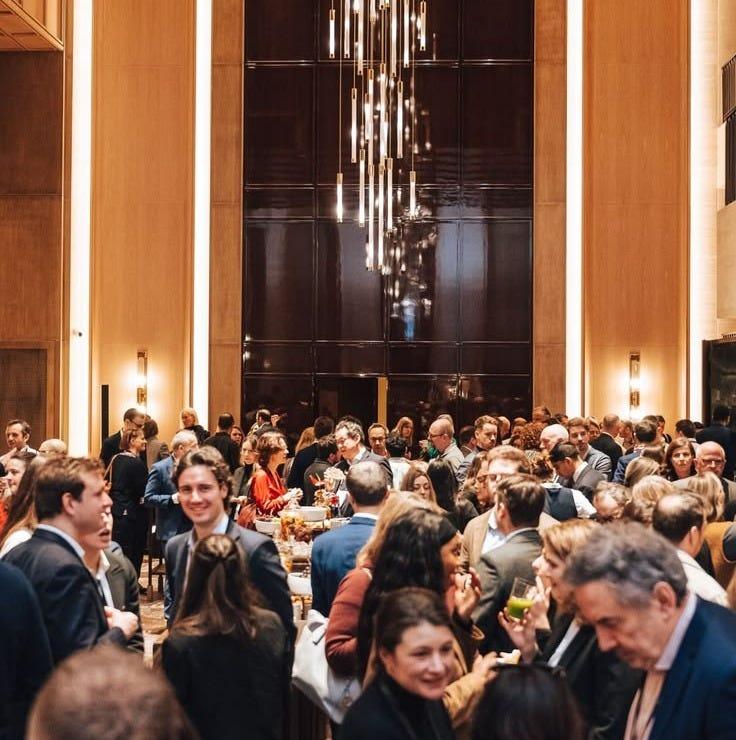
From one meeting to a connection for life
A connection for life has to begin with a meaningful conversation. It must refrain from desperation. You must talk in a manner that sparks genuine pleasure and interest on both sides.
The conversation does not need to be long or indeed heavy at all, but please, be genuine and natural. A short and stilted exchange where you are fast to push for a LinkedIn connection or any other form of contact will feel cold. Digital connections formed from awkward social obligations are the worst to follow up with, for both sides involved.
When a conversation does spark, everything depends on the follow-up contact. You do not need to work in sales to be organised about staying in touch. Connect on LinkedIn, exchange email addresses, Whatsapp, Line, business cards or QR codes; whatever naturally suits the conversation.
Then send a message. You express that it was a pleasure to meet them. You may refer to a specific way of staying in touch; a coffee you had discussed, something you promised to send over, or a link they offered to share.
I recently met someone who, it turned out, had attended the same conference as I had at the Royal Society, just off Pall Mall. We had a lovely conversation about the architecture on that street. When she mentioned that she loved lectures on stars and wanted to learn more about physics for its own sake, I told her about Professor Chris Lintott, who lectures regularly at Gresham College.
Afterwards, I sent her a message via Whatsapp, with a link to Gresham’s lectures. It referred back to the genuine warmth of our conversation. We have an open channel for both of us to stay in each other’s circles, built on a warm human conversation.
From there, you can engage with what your new connections share online. Do not overdo it, and never spam them; simply keep the connection alive. Let them see what you are building as you document it publicly, and support what they share. Learn from them. The most important part of building a relationship is feeding it sustainably.
Back where it began
On Wednesday, I am going back to Gresham College. Professor Chris Lintott, the same professor I recommended to that new connection, is giving a lecture called ‘Our Sun, Our Star’, at Conway Hall.
The first lecture I ever heard at Gresham was on black holes; this one is, fortuitously, on the star at the centre of our own solar system. I already know one fact before I read up on the topic myself:
The sunlight on your face left the Sun’s surface about eight minutes ago, but the energy behind it may have spent many thousands of years working its way out from the core.
I want to know how anyone measures the above. I suspect I will leave with ten more questions.
I am no longer a schoolgirl hoping nobody notices the emergency card. I have four degrees and a career built across event curation, science, fintech and the arts. And ye, on Wednesday, I will sit among people who know far more about the subject than I ever will, and I expect to feel exactly what I felt at fifteen…the thrill of not knowing what comes next.
Gresham’s lectures are free, both in person and online. If you come, look for me at the very front or the very back. Feel free to take the seat next to me.

First published by Judy Yamakawa on 10 November 2026.
Free newsletter
The NOOR Edit
Liked this? Get NOOR’s best stories by email.